
Electroencephalogram in OMR
EEG Test at AVR Scan Centre
If your doctor has recommended an Electroencephalogram (EEG) in OMR, you may want to understand what an EEG records, why it has been recommended, how the test is performed, how to prepare, whether it is safe, and what the results may show.
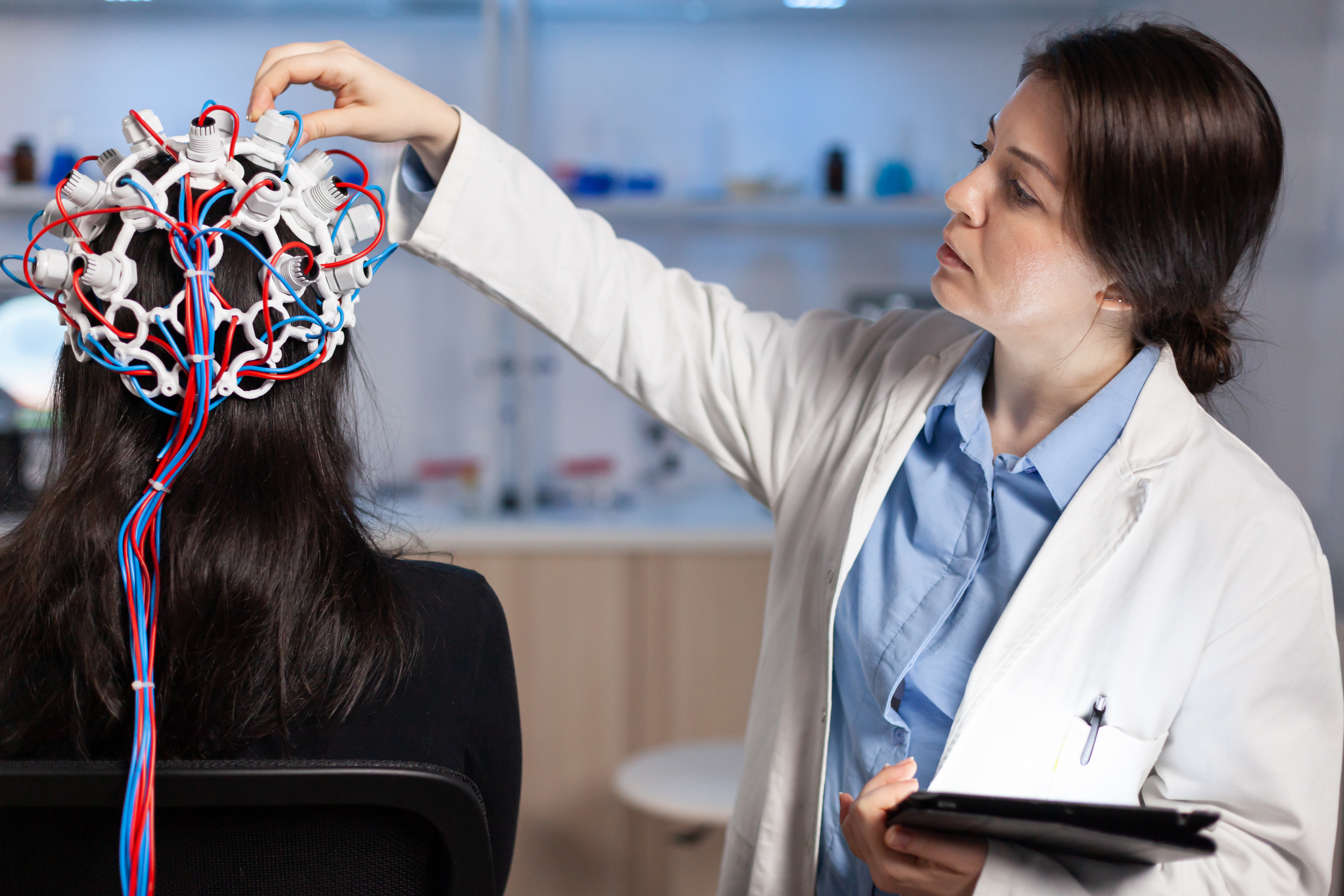
An electroencephalogram (EEG) is a test that records the electrical activity of the brain using electrodes placed on the scalp. It is commonly used in the evaluation and monitoring of epilepsy and seizures and can also support assessment of certain other neurological and sleep-related conditions.
An EEG is not an imaging scan like an MRI or CT. Instead, it records brain-wave activity over time.
AVR Scan Centre provides EEG services for patients looking for neurological diagnostic testing in and around the OMR region.
The type of EEG required depends on your symptoms, medical history and the clinical question your doctor wants to investigate.
What Is an Electroencephalogram (EEG)?
An electroencephalogram, commonly called an EEG, is a non-invasive test that records the electrical activity produced by the brain.
The brain's nerve cells communicate through electrical activity. During an EEG, small electrodes are attached to the scalp to detect this activity and record it as waveforms.
An EEG can provide information about patterns of brain activity that may help healthcare professionals evaluate neurological conditions.
An EEG may be used as part of the assessment of:
- Seizures
- Epilepsy
- Certain episodes of loss of awareness or blackouts
- Some sleep-related conditions
- Certain disorders affecting brain function
The EEG result is interpreted together with the patient's symptoms, medical history and other investigations.
Electroencephalogram in OMR – Where Can You Get an EEG Test?
If you are searching for an Electroencephalogram in OMR or an EEG Test in OMR, AVR Scan Centre provides EEG services for patients seeking neurological diagnostic testing around the OMR region.
The Sholinganallur centre serves patients from OMR and nearby localities. Patients travelling from Padur, Navalur, Siruseri, Kelambakkam, Thiruporur and surrounding areas can contact AVR Scan Centre before visiting to confirm EEG availability and appointment requirements.
Before your appointment, confirm:
- The type of EEG required
- Appointment availability
- Preparation instructions
- Whether sleep deprivation is required
- Whether you should bring previous neurological reports
- Any medication instructions provided by your doctor
Why Might a Doctor Recommend an EEG?
A doctor may recommend an EEG when information about brain electrical activity can help evaluate a neurological symptom or condition.
The most common reason for an EEG is evaluation of seizures or suspected epilepsy. It may also be used in selected cases involving sleep disorders or other conditions affecting brain function.
An EEG may be considered when a patient has experienced:
- Seizure-like episodes
- Unexplained blackouts
- Episodes of altered awareness
- Certain unusual movements
- Suspected epilepsy
- Selected sleep-related symptoms
An EEG may also be used to monitor a known neurological condition or provide additional information after a clinical assessment.
The reason for the test depends on the individual patient's symptoms and medical history.
What Can an EEG Test Show?
An EEG records patterns of electrical activity in the brain that may help healthcare professionals identify abnormalities in brain-wave activity.
Seizure Activity
An EEG can help identify abnormal electrical patterns associated with epilepsy or certain seizure disorders.
Abnormal Brain-Wave Patterns
An EEG may show electrical patterns that differ from expected brain activity.
Sleep-Related Brain Activity
A sleep EEG can record brain activity while a person is asleep and may be requested for selected sleep-related or neurological conditions.
Monitoring Brain Activity
Longer or specialized EEG studies can record brain activity over extended periods when a brief routine EEG may not capture an intermittent event.
An EEG does not automatically diagnose epilepsy or another neurological condition by itself.
Can a Normal EEG Rule Out Epilepsy?
No. A normal EEG does not necessarily rule out epilepsy.
Seizure-related electrical abnormalities may not occur during a short EEG recording, particularly if the abnormal activity is intermittent.
For this reason, a doctor may sometimes recommend:
- Repeat EEG
- Sleep EEG
- Sleep-deprived EEG
- Ambulatory EEG
- Video EEG
- Other neurological investigations
The interpretation depends on the patient's symptoms and the overall clinical assessment.
How Does an EEG Work?
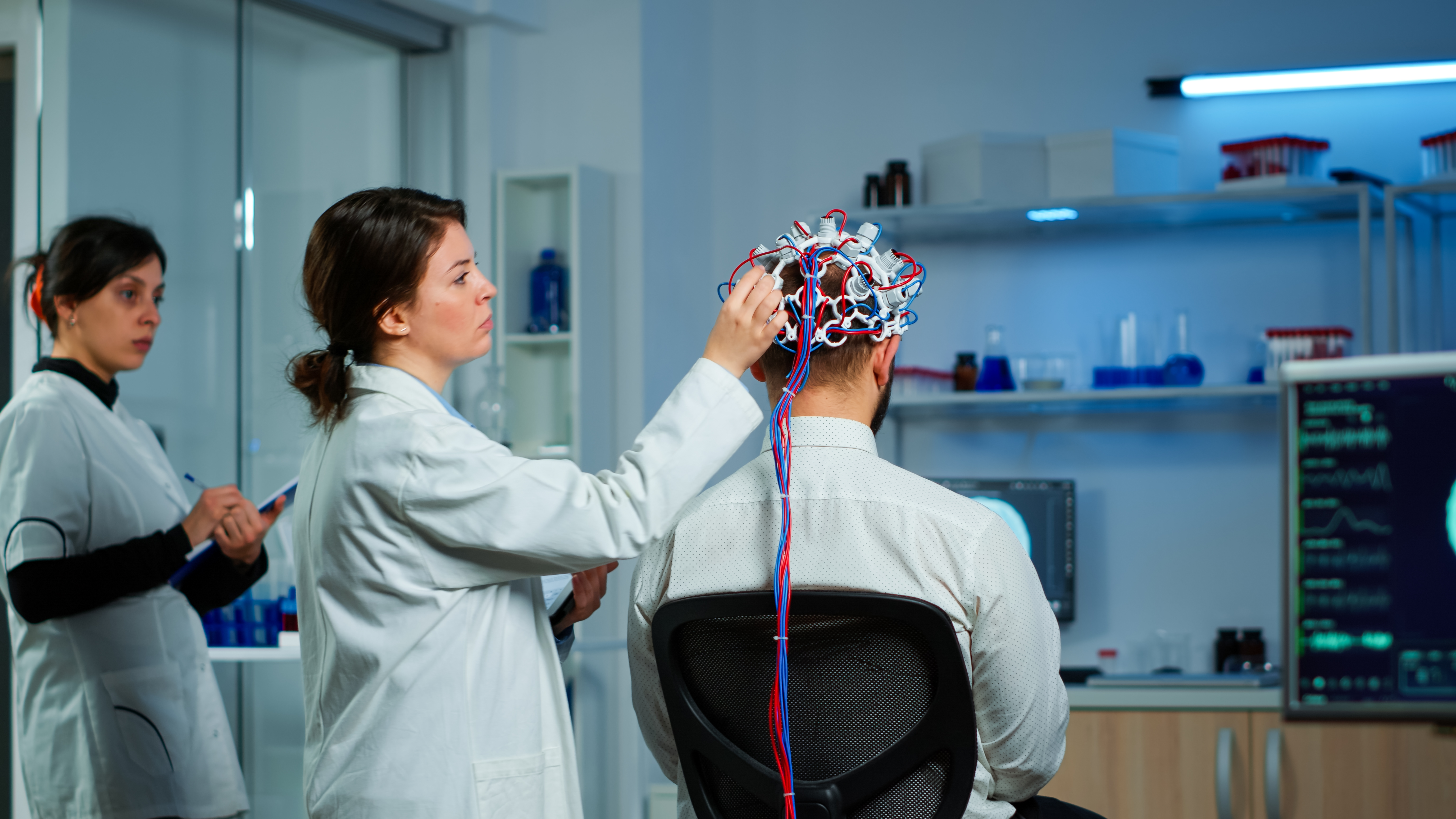
An EEG works by detecting and recording electrical activity from the brain through electrodes placed on the scalp.
- The healthcare professional identifies the appropriate electrode positions.
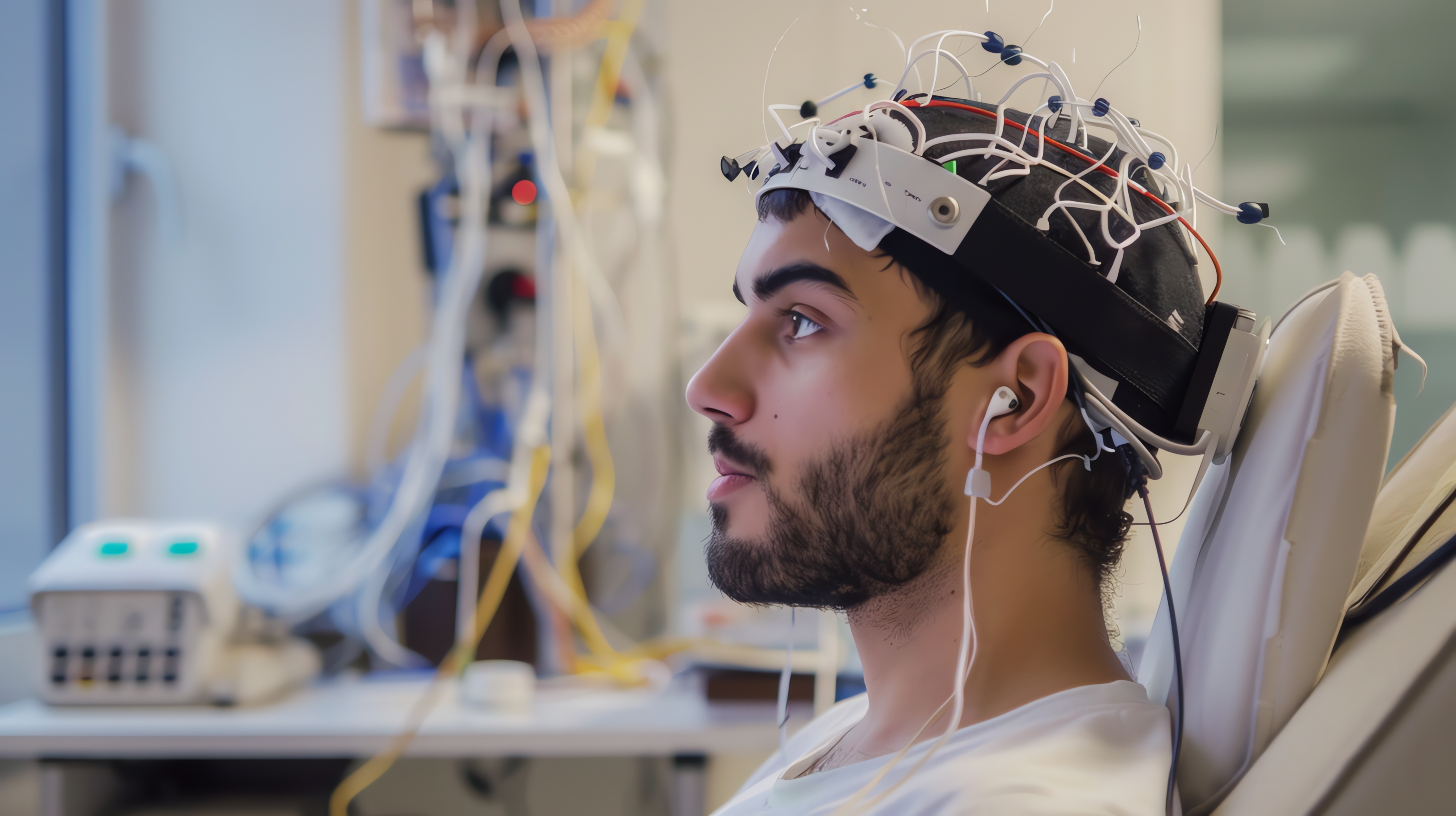
- Small electrodes are attached to the scalp.
- The electrodes connect to an EEG recording system.
- Brain electrical activity is recorded as waveforms.
- The EEG recording is later reviewed and interpreted by an appropriately trained professional.
The electrodes only record electrical activity. They do not send electricity into your brain.
What Happens During an EEG Test?
A routine EEG is generally a non-invasive examination.
1. Preparing the Scalp
Your scalp may be measured and specific electrode locations identified.
2. Applying Electrodes
Small electrodes are attached to the scalp using an appropriate conductive material or adhesive paste.
3. Resting During the Recording
You will usually sit or lie down and remain relaxed while the brain activity is recorded.
4. Following Instructions
Depending on the EEG protocol, you may be asked to:
- Open and close your eyes
- Breathe deeply for a short period
- Look at a flashing light
- Relax
- Try to sleep
These procedures can provide additional information in selected patients.
5. Completing the Recording
Once the required recording has been obtained, the electrodes are removed and the scalp can be cleaned.
How Should You Prepare for an EEG?
Routine EEG preparation is usually simple, but you should follow the instructions given for your specific examination.
Wash Your Hair
Arrive with clean, dry hair and avoid hair products such as:
- Hair gel
- Hair spray
- Hair creams
- Oils
- Styling products
Hair products can make it harder for electrodes to attach securely to the scalp.
Eat and Drink Normally Unless Told Otherwise
For a routine EEG, patients can generally eat and drink normally unless their healthcare team gives different instructions.
Continue Medication Unless Your Doctor Advises Otherwise
Do not stop anti-seizure medicines or other prescribed medication simply because you are having an EEG. Follow your doctor's specific instructions.
Bring a Medication List
Bring information about the medicines you are currently taking.
Ask About Sleep Deprivation
If you have been scheduled for a sleep-deprived EEG, your preparation instructions will be different. You may be asked to reduce your sleep before the examination.
Is an EEG Test Safe?
A routine EEG is generally safe, painless and non-invasive.
The electrodes only record the brain's electrical activity and do not deliver electricity into the brain.
Some patients may develop minor skin redness or irritation where electrodes have been attached.
Certain EEG procedures, such as flashing-light stimulation or deep breathing, may very rarely trigger a seizure in susceptible people. These procedures are used selectively and under appropriate supervision.
Tell the EEG professional if:
- You have a history of photosensitive seizures
- You have concerns about flashing lights
- You have a medical condition that affects your ability to perform deep breathing
- You have previously reacted to adhesive materials
Does an EEG Use Radiation?
No. An EEG does not use X-rays, ionizing radiation, magnetic fields or radioactive substances.
An EEG records naturally occurring electrical activity generated by the brain.
This makes it different from:
- CT Scan → Uses X-rays
- X-Ray → Uses X-rays
- MRI → Uses a strong magnetic field and radio waves
- EEG → Records brain electrical activity
Is an EEG Test Painful?
A routine EEG is generally painless.
The electrodes are placed on the scalp to record brain activity.
You may feel mild pressure or some discomfort while the electrodes are attached or removed, and the conductive paste may leave your hair feeling sticky afterward.
The recording itself does not normally cause pain.
What Is a Routine EEG?
A routine EEG is a standard EEG recording performed over a relatively short period while you are awake, usually at rest.
During a routine EEG, you may be asked to perform activation procedures such as:
- Opening and closing your eyes
- Deep breathing
- Looking at a flashing light
These procedures may provide additional information about brain activity. The exact protocol depends on the patient's condition and the EEG requested.
What Is a Sleep or Sleep-Deprived EEG?
A sleep EEG records brain activity while you are asleep, while a sleep-deprived EEG is performed after intentionally reducing sleep before the examination.
Sleep can reveal electrical patterns that may not be visible during a routine awake EEG.
A sleep-deprived EEG may involve specific instructions about reducing sleep the night before.
Important Safety Point
If you are asked to undergo a sleep-deprived EEG, do not drive when significantly sleep-deprived. Arrange suitable transportation according to the instructions provided by your healthcare team.
What Is an Ambulatory EEG?
An ambulatory EEG records brain electrical activity while you continue many of your usual daily activities using a portable recording system.
It may be useful when symptoms or abnormal electrical activity are intermittent and a short routine EEG may not capture an event.
The duration can be substantially longer than a standard EEG. Whether ambulatory monitoring is appropriate depends on your clinical situation.
What Is Video EEG?
Video EEG combines continuous EEG recording with video monitoring so that brain-wave activity can be compared with physical events or symptoms occurring during the recording.
Video EEG may be useful when doctors need to determine whether an event is associated with abnormal electrical brain activity.
Some video EEG studies are performed over extended periods, depending on the clinical purpose.
How Long Does an EEG Test Take?
The duration of an EEG depends on the type of examination.
A routine EEG commonly takes around 45 minutes to 1 hour, although total appointment time can vary.
Sleep-deprived, ambulatory and video EEG studies can take longer.
Before your appointment, confirm the expected duration and any preparation requirements for your specific EEG.
What Happens After an EEG?
After the recording is completed, the electrodes are removed and your scalp can be cleaned.
You can usually return home after a routine EEG and continue normal activities unless your healthcare team gives different instructions.
The EEG recording needs to be analyzed before the final interpretation is provided. Your result may therefore not be available immediately after the test.
Your doctor will explain the findings and determine whether additional EEG testing or other neurological investigations are necessary.
Why Choose AVR Scan Centre for an Electroencephalogram in OMR?
When choosing an EEG Test Centre in OMR, patients may want to consider location, availability of the required EEG examination, preparation instructions and appointment requirements.
AVR Scan Centre provides EEG services for patients seeking neurological diagnostic testing in and around OMR.
1. EEG Diagnostic Service
AVR Scan Centre provides Electroencephalogram testing as part of its diagnostic services.
2. OMR-Side Location
The Sholinganallur centre serves patients looking for diagnostic services in and around the OMR region.
3. Patient Preparation Guidance
Patients can contact the centre to confirm the EEG type, preparation requirements and appointment process before visiting.
4. Multiple Diagnostic Services
AVR Scan Centre also provides:
- MRI Scan 1.5T
- MultiSlice 3D Spiral CT Scan
- Ultrasound
- X-Ray
- 3D/4D Obstetrics
- Computerized ECG
- Echocardiogram
- Treadmill Test
- SonoMammography
- PFT
- Lab Services
- Preventive Master Health Checkup
- Digital Mammogram
- OPG
What Should You Check Before Booking an EEG in OMR?
Before scheduling your EEG, confirm:
- Which type of EEG your doctor has requested
- Whether it is a routine or sleep-related EEG
- Whether sleep deprivation is required
- Whether your regular medication should be continued
- Whether you need to bring previous neurological reports
- Whether an appointment is required
- How long the examination is expected to take
Before You Visit AVR Scan Centre
Arrive with clean, dry hair without gel, oil, spray or other styling products , unless the centre gives different instructions.
Bring your doctor's prescription or referral and relevant previous neurological reports when available.
Do not independently stop or change prescribed medication before an EEG unless your doctor specifically instructs you to do so.
Frequently Asked Questions About Electroencephalogram in OMR
An electroencephalogram, or EEG, is a test that records the electrical activity of the brain through electrodes placed on the scalp.
AVR Scan Centre provides EEG services for patients seeking neurological diagnostic testing in and around the OMR region. Contact the centre to confirm availability and appointment details.
No. EEG records electrical activity from the brain and does not use ionizing radiation.
A routine EEG is generally painless. The electrodes are attached to the scalp, and the recording itself does not normally cause pain.
Yes. Clean, dry hair without gel, oil, hairspray or other styling products helps the electrodes attach properly.
For a routine EEG, you can generally eat and drink normally unless your healthcare team gives you different instructions.
Usually, patients continue their regular medication unless their doctor or EEG team gives different instructions. Do not stop prescribed medicines without medical advice.
An EEG is an important test in the evaluation of epilepsy and seizure disorders, but the diagnosis is based on the overall clinical assessment rather than the EEG alone.
No. A person can have epilepsy even if a routine EEG does not show an abnormal pattern during the recording.
Electrodes are placed on the scalp and connected to an EEG recording system. You may be asked to open and close your eyes, breathe deeply or look at a flashing light depending on the test protocol.
A sleep-deprived EEG is performed after you intentionally reduce your sleep before the examination. Sleep may reveal brain-wave abnormalities that are not visible during an awake EEG.
An ambulatory EEG uses a portable recording system to record brain electrical activity for a longer period while you continue many normal activities.
Video EEG records brain electrical activity together with video so that physical events can be compared with the EEG recording.
An EEG is not a structural brain imaging test. It records electrical activity. If your doctor needs to look for a tumour or another structural abnormality, an imaging examination such as MRI may be required.
No. An EEG records electrical activity in the brain, while an MRI produces detailed images of brain structures using magnetic fields and radio waves.
A routine EEG commonly takes approximately 45 minutes to an hour, although appointment time can vary.
An abnormal EEG does not automatically establish a specific diagnosis. Your doctor will interpret the findings alongside your symptoms, medical history and other investigations.
A normal EEG does not necessarily mean that there is no neurological disorder or that seizures cannot occur. Your doctor may recommend further evaluation depending on your symptoms.
In susceptible individuals, flashing-light stimulation can very rarely trigger a seizure. Such activation procedures are performed selectively and with appropriate precautions.
Deep breathing can very rarely trigger a seizure in susceptible people. Your healthcare professional will assess whether activation procedures are appropriate for you.
Bring your doctor's prescription or referral, a list of your current medications and relevant previous neurological reports when available.
Get Your Electroencephalogram at AVR Scan Centre, Sholinganallur
An EEG provides information about the brain's electrical activity and can be an important part of the evaluation of seizures, epilepsy and selected neurological conditions.
Understanding which type of EEG you need, how to prepare and what happens during the recording can help you approach the examination with confidence.
AVR Scan Centre provides EEG services for patients looking for neurological diagnostic testing in and around OMR.
Before visiting, contact the centre to confirm:
- Your required EEG examination
- Appointment availability
- Preparation instructions
- Whether sleep deprivation is required
- Any medication-related instructions
Contact AVR Scan Centre – Sholinganallur to enquire about the EEG test recommended by your doctor and confirm appointment availability.
AVR Scan Centre – Sholinganallur
First Floor, No. 278/1 & 278/2, Commercial Building,
Ramanyam Pushkar 2, Kalaignar Karunanidhi Salai,
Sholinganallur – 600119.
