
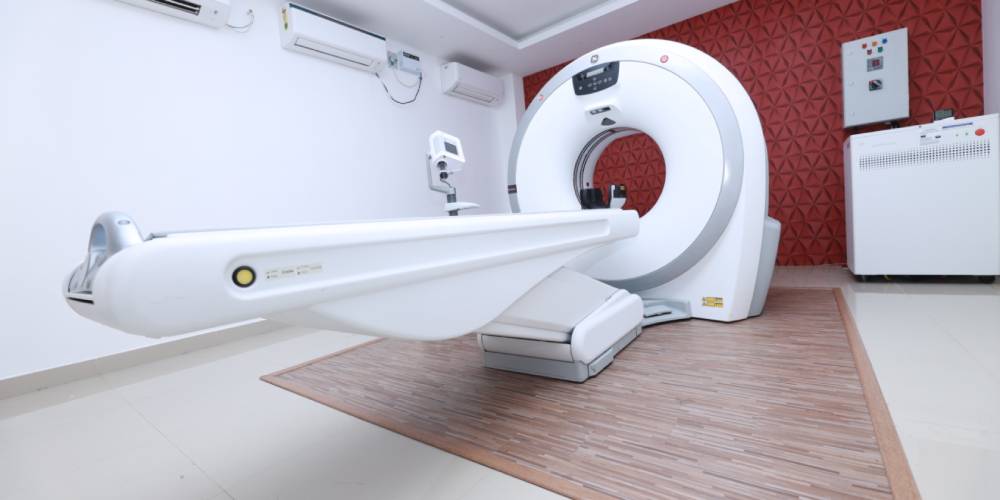
MRI Scan in OMR
MRI Imaging at AVR Scan Centre
If your doctor has recommended an MRI scan, you may be looking for a reliable MRI Scan in OMR and want to understand what the examination involves, how to prepare, whether MRI is safe, and what happens during the scan.
MRI (Magnetic Resonance Imaging) is a non-invasive diagnostic imaging examination that uses a strong magnetic field and radio waves to create detailed images of structures inside the body. It is particularly useful for examining many soft tissues, including the brain, spine, joints, muscles, ligaments and tendons.
AVR Scan Centre provides 1.5T MRI Scan services at its Sholinganallur centre, serving patients looking for diagnostic imaging in and around the OMR region.
Whether you are searching for an MRI Centre in OMR, MRI Scan in Sholinganallur, 1.5T MRI near OMR, or an MRI Scan Centre near you,understanding the examination and its preparation can help you make informed decisions based on your doctor's recommendation.
What Is an MRI Scan?
An MRI scan is a non-invasive diagnostic imaging test that uses magnetic fields and radio waves to create detailed images of structures inside the body.
MRI does not use ionizing radiation. It can provide detailed images of many soft tissues and can produce images in different planes depending on the examination and imaging protocol.
An MRI examination may be used to examine:
- Brain
- Spine
- Muscles
- Ligaments
- Tendons
- Selected organs
- Other soft tissues
The type of MRI required depends on your symptoms, medical history and the clinical question your doctor needs the examination to answer.
Important: An MRI scan is an imaging investigation. The findings need to be interpreted along with your symptoms, medical history, clinical examination and other investigations by your healthcare professional.
MRI Scan in OMR – Where Can I Get an MRI Scan?
If you are searching for an MRI Scan in OMR, AVR Scan Centre provides 1.5T MRI Scan services at its Sholinganallur centre.
The Sholinganallur centre is located in the OMR region and can be accessed by patients from nearby areas.
Patients travelling from Padur, Navalur, Siruseri, Kelambakkam, Thiruporur and surrounding OMR localities can contact AVR Scan Centre before visiting to confirm the availability of the specific MRI examination recommended by their doctor.
AVR Scan Centre – Sholinganallur:
Address:
First Floor, No. 278/1 & 278/2, Commercial Building, Ramanyam Pushkar 2, Kalaignar Karunanidhi Salai, Sholinganallur – 600119.
MRI Service: 1.5T MRI Scan
Before your appointment, confirm:
- The specific CT examination required
- Availability
- Appointment requirements
- Preparation instructions
- Whether any additional information is required before the scan
Why Might a Doctor Recommend an MRI Scan?
A doctor may recommend an MRI when detailed imaging can help evaluate a particular symptom, suspected condition or body structure.
The decision to recommend an MRI may depend on:
- Your symptoms
- Duration of symptoms
- Medical history
- Physical examination
- Previous investigation results
- Suspected condition
- Body part requiring evaluation
MRI is not automatically required for every symptom. Your doctor determines whether an MRI is appropriate based on your individual clinical situation.
For example, depending on the clinical indication, MRI may be considered when detailed imaging of the brain, spine, joints, muscles, ligaments, tendons or other soft tissuesis required.
What Areas of the Body Can an MRI Scan Examine?
MRI can be used to examine different parts of the body depending on the clinical requirement.
Brain MRI
MRI can produce detailed images of the brain and surrounding structures. Depending on the clinical indication, a doctor may recommend brain MRI when investigating certain neurological symptoms or suspected abnormalities.
Spine MRI
MRI can provide detailed images of the spine, discs, spinal cord and surrounding soft tissues.
It may be recommended in selected cases involving:
- Persistent back pain
- Neck pain
- Pain radiating into the arms or legs
- Suspected disc-related problems
- Certain neurological symptoms
- Other suspected spinal abnormalities
Joint MRI
MRI can provide detailed images of structures within and around joints, including:
- Cartilage
- Ligaments
- Tendons
- Muscles
- Joint structures
It may therefore be useful for evaluating selected sports injuries, joint problems and soft-tissue injuries.
Musculoskeletal MRI
MRI can provide detailed information about muscles, tendons, ligaments and other soft tissues.
Other MRI Examinations
Depending on the medical indication, MRI may also be used to evaluate selected organs and soft tissues.
The appropriate MRI examination should be selected according to your doctor's recommendation rather than choosing a scan solely based on an online search.
What Is a 1.5T MRI Scan?
1.5T MRI refers to an MRI scanner with a magnetic field strength of 1.5 Tesla.
AVR Scan Centre provides 1.5T MRI Scan services at its Sholinganallur centre.
Magnetic field strength is one aspect of MRI technology. The usefulness of an MRI examination also depends on factors such as:
- Body part being examined
- Imaging protocol
- MRI sequences performed
- Clinical question
- Patient-specific requirements
Your doctor may recommend a particular MRI examination based on your symptoms and medical requirement.
How Does an MRI Scan Work?
MRI uses a strong magnetic field and radio waves to create detailed images of structures within the body.
During the examination, the MRI system collects signals and processes them into diagnostic images.
Depending on the examination, images can be obtained in different planes to help visualize anatomical structures.
Because MRI uses a powerful magnetic field, safety screening is an essential part of the examination.
What Happens During an MRI Scan?
1. Safety Screening
Before the examination, the MRI team will ask about relevant medical history, previous surgeries, implants and medical devices.
2. Removing Metal Objects
You may be asked to remove items such as:
- Jewellery
- Watches
- Hair accessories
- Hearing aids
- Metallic accessories
- Other objects that may be affected by the magnetic field
3. Positioning
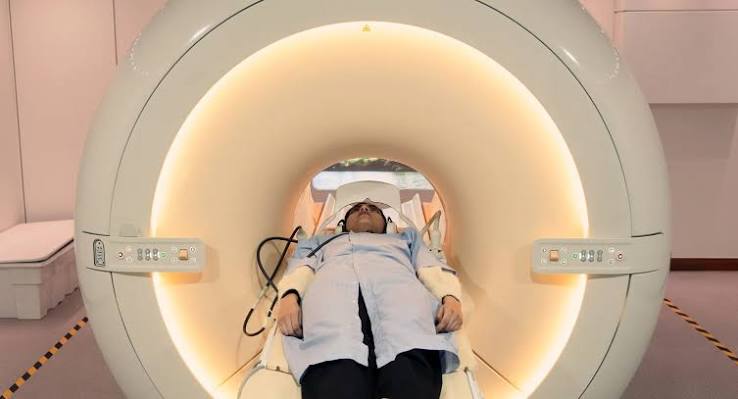
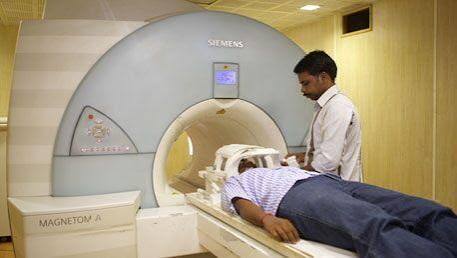
You will be positioned on the MRI examination table according to the body part being examined.
4. Image Acquisition
The table moves into the MRI scanner while images are acquired.
MRI scanners can produce loud tapping, knocking or buzzing sounds during imaging.
5. Staying Still
Remaining as still as possible is important because movement can affect image quality and may require some images to be repeated.
6. Contrast, If Required
Some MRI examinations may involve a contrast agent when clinically indicated.
Not every MRI scan requires contrast.
How Should You Prepare for an MRI Scan?
MRI preparation depends on the type of examination being performed.
Follow the Instructions for Your Examination
Ask AVR Scan Centre whether your particular MRI examination requires any preparation before you arrive.
Tell the MRI Team About Implants
Inform the MRI team if you have:
- Pacemaker
- Cochlear implant
- Neurostimulator
- Metal implant
- Other implanted medical device
- Metal fragments in your body
Do not assume that an implant is automatically safe for MRI. The MRI team needs to assess relevant device information before the examination.
Tell Them If You Are Pregnant
Inform your doctor or MRI team if you are pregnant or may be pregnant.
Tell Them About Kidney Problems
If contrast is being considered, relevant information about kidney function may be important for the safety assessment.
Mention Claustrophobia
If you feel uncomfortable in enclosed spaces, tell the MRI team before your examination.
Ask Whether Fasting Is Required
Do not assume that fasting is necessary for every MRI scan.
Preparation depends on the specific examination, so follow the instructions provided for your appointment.
Is an MRI Scan Safe?
MRI does not use ionizing radiation, but safety screening is essential because MRI uses a powerful magnetic field.
Before an MRI examination, tell the MRI team about:
- Metal implants
- Electronic medical devices
- Cochlear implants
- Previous surgeries
- Metal fragments
- Pregnancy or possible pregnancy
- Kidney problems
- Previous reactions to contrast agents
Some medical devices may be suitable for MRI under specific conditions, while others may require additional precautions or may not be suitable.
Always provide complete information about implants and medical devices before entering the MRI examination area.
Does an MRI Scan Use Radiation?
No. MRI does not use ionizing radiation.
MRI creates images using:
Magnetic field + Radio waves → Diagnostic images
Is an MRI Scan Painful?
MRI is generally a non-invasive imaging examination.
There is no surgical cutting involved in a routine MRI scan.
During the examination, you will need to remain still while images are acquired. The scanner can produce loud tapping, knocking or buzzing sounds.
Some people may also find the enclosed space uncomfortable.
If you experience anxiety or claustrophobia, inform the MRI team before the examination.
Does Every MRI Scan Require Contrast?
No. Not every MRI examination requires contrast.
Whether contrast is needed depends on:
- Body part being examined
- Clinical question
- Suspected condition
- MRI protocol
- Doctor's or radiologist's recommendation
If contrast is being considered, tell your healthcare team about relevant medical conditions, previous reactions, kidney problems and pregnancy.
MRI Scan vs CT Scan – What Is the Difference?
MRI and CT are both important diagnostic imaging techniques, but they use different technologies and may be selected for different clinical situations.
| MRI Scan | CT Scan |
|---|---|
| Uses X-rays | Uses magnetic fields and radio waves |
| Uses magnetic fields and radio waves | Uses X-rays |
| Does not use ionizing radiation | Uses ionizing radiation |
| Provides detailed imaging of many soft tissues | Useful for many clinical situations and rapid imaging |
| Requires MRI safety screening | Radiation exposure is considered |
| Some examinations may take longer | Often provides rapid imaging |
Is MRI Better Than CT?
Neither MRI nor CT is universally better.
The appropriate examination depends on the:
- Clinical question
- Body part
- Symptoms
- Urgency
- Information required
Your doctor may recommend MRI, CT, X-ray, ultrasound or another examination based on your individual clinical needs.
What Happens After an MRI Scan?
After the examination, the acquired images are reviewed as part of the diagnostic process.
If you received specific instructions during the examination, follow the guidance provided by the healthcare team.
MRI findings should be considered together with:
- Symptoms
- Medical history
- Clinical examination
- Previous investigations
- Other imaging reports
Your doctor can explain the findings in relation to your overall clinical condition.
An MRI report should not be interpreted in isolation or used as a substitute for medical consultation.
Why Choose AVR Scan Centre for an MRI Scan in OMR?
When choosing an MRI Centre in OMR, patients may want to consider the location, MRI service available, examination requirements and accessibility.
AVR Scan Centre provides 1.5T MRI services at its Sholinganallur centre.
1. 1.5T MRI Service
AVR Scan Centre provides 1.5T MRI Scan services for diagnostic imaging requirements.
2. Sholinganallur Location
The MRI service is available at the Sholinganallur centre, making it an option for patients looking for MRI services around the OMR region.
3. Patient Information Before the Scan
Patients can enquire about the specific MRI examination, preparation requirements and appointment process before visiting.
4. Multiple Diagnostic Services
AVR Scan Centre provides several diagnostic services, including:
- MultiSlice 3D Spiral CT Scan
- Ultrasound
- X-Ray
- 3D/4D Obstetrics
- Computerized ECG
- Echocardiogram
- SonoMammography
- Treadmill Test
- EEG
- Lab Services
- Preventive Master Health Checkup
- Digital Mammogram
- OPG
What Should You Check Before Booking an MRI Scan in OMR?
Before scheduling your MRI, make sure you know:
- Which body part your doctor has recommended for imaging
- Whether you have a doctor's prescription or referral
- X-Ray
- Whether contrast has been recommended
- Whether fasting or other preparation is required
- Whether you have implants or medical devices
- Whether you have relevant previous scan reports
- Where the required MRI service is available
Before You Visit AVR Scan Centre
Confirm the specific MRI examination and preparation requirements with the centre before your appointment.
This can help avoid confusion if different MRI examinations have different preparation or safety requirements.
Do not select an MRI examination solely because of an online search. The examination should match your doctor's clinical recommendation.
Frequently Asked Questions About MRI Scan in OMR
AVR Scan Centre provides 1.5T MRI Scan services at its Sholinganallur centre. Contact the centre to confirm availability and appointment requirements for your specific MRI examination.
A 1.5T MRI uses a magnetic field strength of 1.5 Tesla to produce detailed diagnostic images of structures inside the body.
No. MRI uses magnetic fields and radio waves rather than ionizing radiation.
MRI is generally non-invasive. You will need to remain still while images are acquired, and the scanner produces loud sounds during the examination.
Not necessarily. Preparation depends on the type of MRI examination. Follow the instructions provided for your specific scan.
Tell the MRI team about your pacemaker before the examination. MRI safety depends on the specific device and its approved conditions of use.
Tell the MRI team about any implants, surgical clips or metal fragments before the scan. The team will determine the appropriate safety requirements.
No. Contrast is required only for selected MRI examinations when clinically indicated.
Bring your doctor's prescription or referral and relevant previous scan reports if available. If you have an implant or medical device, provide its details to the MRI team.
Yes. AVR Scan Centre provides its 1.5T MRI service at its Sholinganallur centre.
The MRI examination should be determined according to your doctor's recommendation, symptoms and clinical requirement. Do not select an MRI examination solely based on an online search.
MRI and CT have different uses. The appropriate examination depends on the clinical question, body part, symptoms and information your doctor needs.
The duration can vary depending on the body part being examined, MRI protocol and whether additional sequences or contrast are required. Contact the centre about the expected duration of your specific examination.
It depends on the type of MRI examination. Some scans have specific preparation requirements, while others may not. Follow the instructions given for your appointment.
Inform your doctor and MRI team if you are pregnant or may be pregnant. They can determine whether MRI is appropriate in your specific situation and whether any special considerations are required.
MRI Scan in OMR – Contact AVR Scan Centre
If your doctor has recommended an MRI, understanding the purpose, preparation and safety requirements can help you approach the examination with greater confidence.
AVR Scan Centre provides 1.5T MRI Scan services at its Sholinganallur centre for patients looking for MRI imaging in and around OMR.
Before visiting, contact AVR Scan Centre to confirm:
- Your required MRI examination
- Availability
- Appointment requirements
- Preparation instructions
- Any specific safety information you need to provide
AVR Scan Centre – Sholinganallur
First Floor, No. 278/1 & 278/2, Commercial Building, Ramanyam Pushkar 2, Kalaignar Karunanidhi Salai, Sholinganallur – 600119.
Contact AVR Scan Centre to enquire about the MRI examination recommended by your doctor and confirm appointment availability.
