
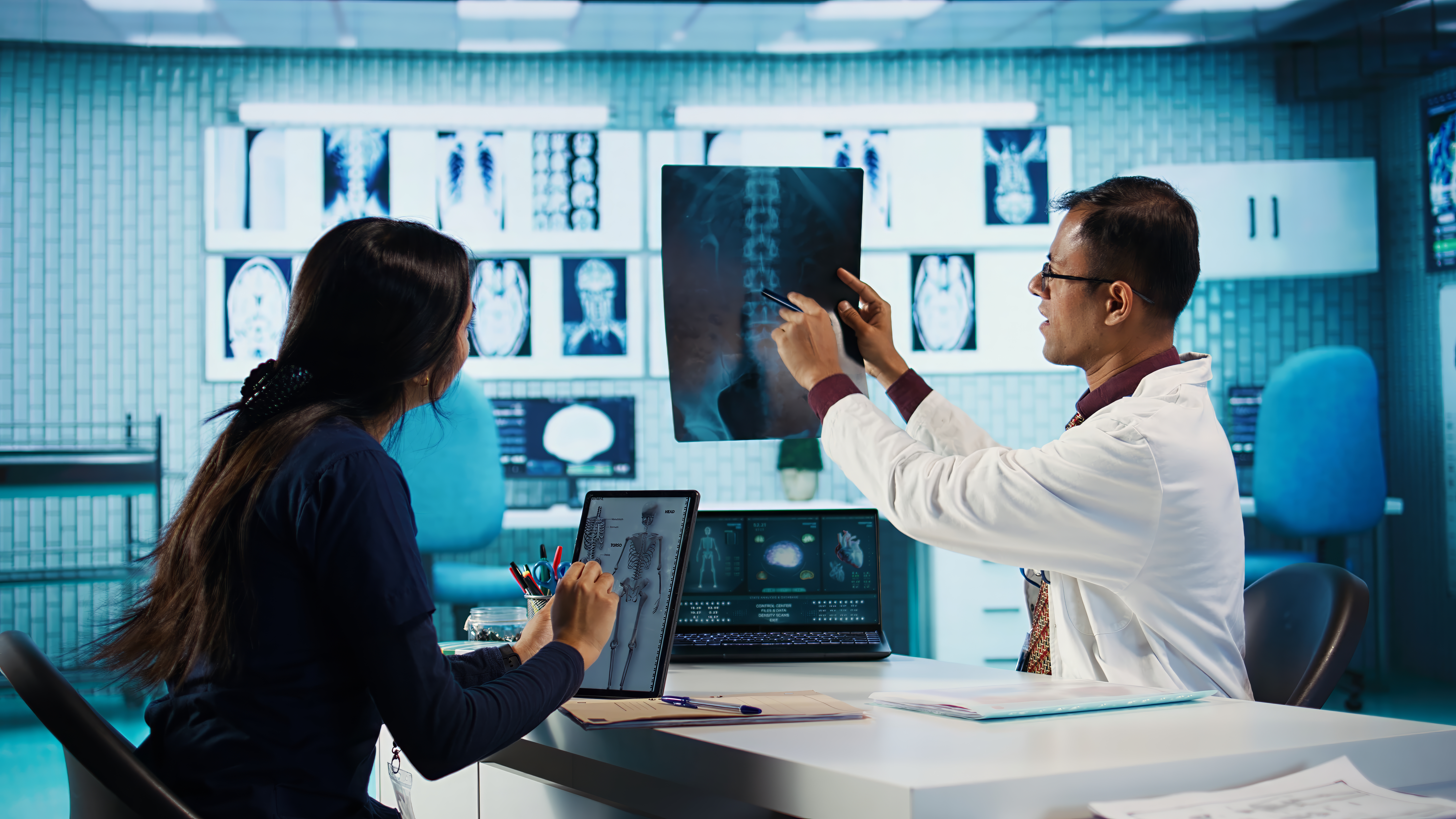
X-Ray in OMR
Diagnostic X-Ray Imaging at AVR Scan Centre
When your doctor recommends an X-ray, you may have questions about why the examination is needed, what an X-ray can show, whether you need any preparation, how safe it is, and where to get an X-Ray in OMR.
An X-ray is a diagnostic imaging examination that uses X-rays to create images of structures inside the body. It is commonly used to examine bones and the chest and may also be used for other parts of the body depending on the clinical requirement.
If you are searching for an X-Ray Centre in OMR, AVR Scan Centre provides X-Ray diagnostic services at its Sholinganallur centre.
The exact type of X-ray depends on the body part your doctor wants to evaluate and the clinical question that needs to be answered.
What Is an X-Ray?
An X-ray is a diagnostic imaging test that uses X-rays to create images of structures inside the body.
Different tissues absorb X-rays differently. This produces varying shades on the resulting image, allowing healthcare professionals to examine anatomical structures.
X-rays are particularly useful for:
- Bones
- Chest and lungs
- Selected joints
- Other body areas when clinically indicated
An X-ray is an imaging investigation rather than a diagnosis by itself. The findings need to be considered along with your symptoms, medical history and clinical examination.
X-Ray in OMR – Where Can You Get an X-Ray?
If you are searching for an X-Ray in OMR, AVR Scan Centre provides diagnostic imaging services from its Sholinganallur centre.
AVR Scan Centre – Sholinganallur:
First Floor, No. 278/1 & 278/2, Commercial Building,
Ramanyam Pushkar 2, Kalaignar Karunanidhi Salai,
Sholinganallur – 600119.
Patients travelling from nearby OMR areas such as Padur, Navalur, Siruseri, Kelambakkam, Thiruporur and surrounding localities can contact the centre before visiting to confirm the availability of the required X-ray examination.
Before your appointment, confirm:
- The body part requiring imaging
- The type of X-ray recommended
- Whether any preparation is required
- Appointment requirements
- Any specific instructions for your examination
Why Might a Doctor Recommend an X-Ray?
A doctor may recommend an X-ray when imaging can help evaluate a bone, chest or other relevant body structure.
The decision may depend on:
- Your symptoms
- Injury or trauma
- Pain or swelling
- Medical history
- Physical examination
- Suspected condition
- The body area that needs evaluation
For example, an X-ray may be recommended when a doctor suspects a fracture after an injury or needs to assess the chest for a particular clinical concern.
The appropriate X-ray should be based on your doctor's recommendation.
What Can an X-Ray Show?
X-rays are especially useful for evaluating bones and many chest-related structures.
Bone and Fracture Imaging
X-rays are commonly used to assess suspected fractures and certain bone injuries.
They may help evaluate:
- Fractures
- Bone alignment
- Joint positioning
- Certain dislocations
- Other structural changes
Chest X-Ray
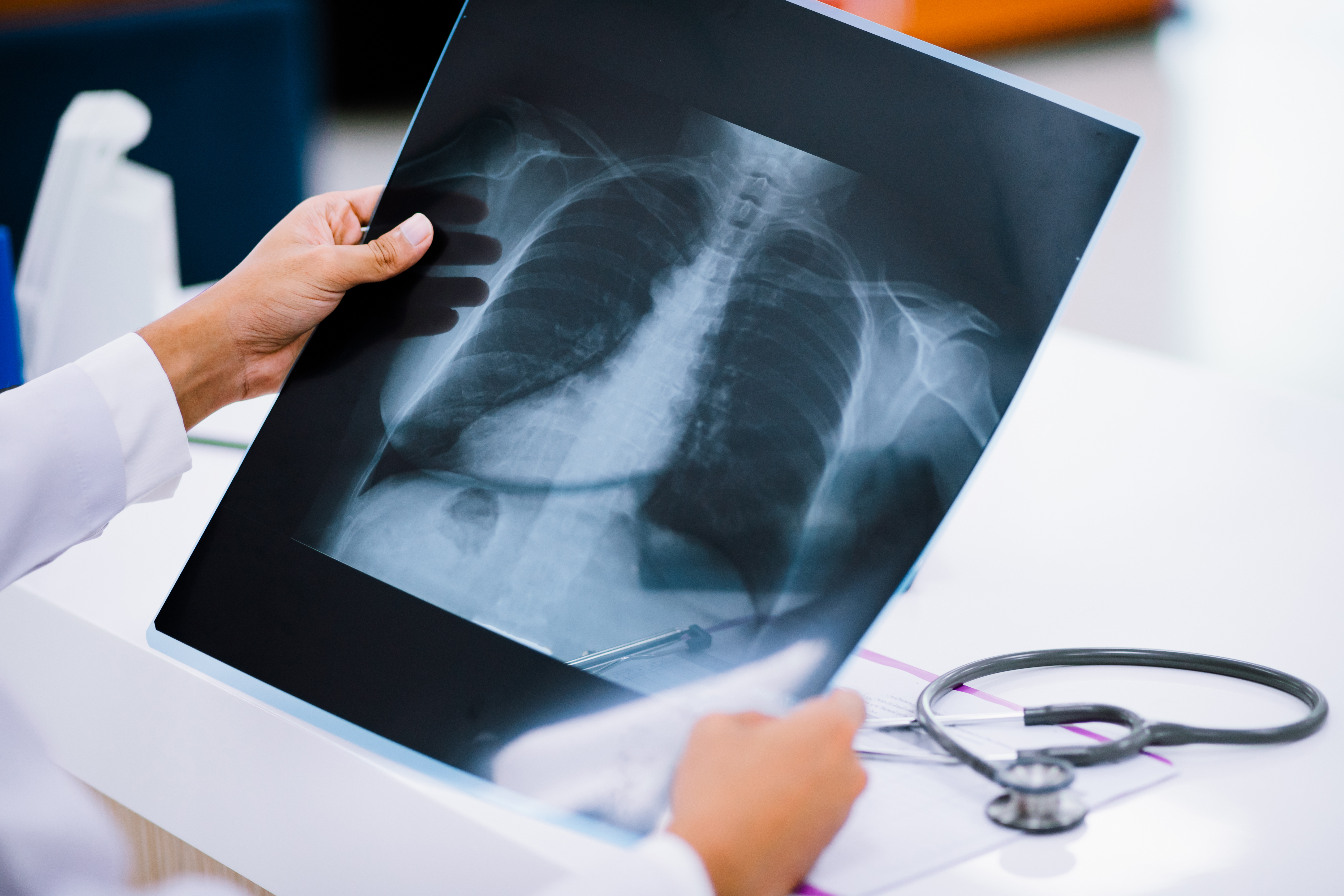
A chest X-ray produces images of structures within the chest, including the lungs and heart region.
Depending on the clinical situation, it may help assess certain:
- Lung abnormalities
- Chest infections
- Areas of abnormal opacity
- Other chest-related findings
Joint Imaging
X-rays can provide information about the bones forming a joint and may help assess selected injuries or structural changes.
Other Body Areas
X-rays may also be used to examine other anatomical regions when clinically required. The examination should be selected according to your symptoms, medical history and your doctor's recommendation.
What Types of X-Rays Are Commonly Performed?
The exact X-ray examination depends on the body part and clinical reason for imaging.
Chest X-Ray
A chest X-ray provides images of the lungs, heart region and other structures within the chest.
Bone X-Ray
A bone X-ray may be recommended to evaluate suspected fractures, injuries or selected structural abnormalities.
Spine X-Ray
Spine X-rays provide images of the bony structures of the spine and may be used for selected clinical indications.
Joint X-Ray
Joint X-rays can help assess the bones and alignment around a joint.
Extremity X-Ray
Depending on the clinical requirement, X-rays may be performed for areas such as:
- Hand
- Wrist
- Elbow
- Forearm
- Foot
- Ankle
- Lower leg
Other Region-Specific X-Rays
Other body regions can also be imaged when an X-ray is clinically appropriate. Do not choose the type of X-ray solely from an online search. The examination should match your doctor's recommendation.
How Does an X-Ray Work?
X-ray imaging works by passing a controlled beam of X-rays through the body and capturing how different tissues absorb the radiation.
Dense structures such as bones absorb more X-rays and therefore appear relatively brighter on the resulting image.
The imaging information is captured and processed to produce a diagnostic image that can be reviewed by healthcare professionals.
The technique varies depending on the body part being examined.
What Happens During an X-Ray?
An X-ray examination is generally straightforward.
1. Examination Confirmation
The imaging team confirms the body part and type of X-ray required.
2. Preparation
Depending on the examination, you may be asked to remove certain jewellery, metallic accessories or clothing that could interfere with the image.
3. Positioning
You will be positioned according to the required X-ray view. Depending on the body part, you may be standing, sitting or lying down.
4. Image Acquisition
The X-ray equipment is positioned correctly and the image is captured. You will usually need to remain still during the exposure.
5. Additional Views
Some examinations require more than one image or viewing angle to obtain the necessary diagnostic information. For certain chest X-rays, you may be asked to briefly hold your breath while the image is taken.
How Should You Prepare for an X-Ray?
Most routine X-rays require little or no special preparation. However, preparation can vary depending on the body part and examination.
Follow the Instructions Provided
Ask the diagnostic centre whether your particular X-ray requires any preparation before your appointment.
Remove Metal Objects When Requested
You may be asked to remove:
- Jewellery
- Watches
- Metallic accessories
- Certain clothing items
- Other objects that may interfere with imaging
Tell the Team If You Are Pregnant or May Be Pregnant
Because X-rays use ionizing radiation, inform the imaging team if you are pregnant or may be pregnant.
Bring Relevant Information
If available, bring:
- Doctor's prescription or referral
- Previous relevant imaging reports
- Relevant medical records
Is an X-Ray Safe?
X-rays use ionizing radiation, but the amount used for diagnostic imaging is controlled according to the examination.
Before your examination, inform the imaging team if:
- You are pregnant or may be pregnant
- You have concerns about radiation exposure
- You have relevant previous imaging
- There is any other information you believe may affect the examination
Your healthcare team can determine the appropriate imaging procedure and safety precautions for your situation.
A medically appropriate X-ray is performed when the information it provides is considered useful for patient care.
Does an X-Ray Use Radiation?
Yes. X-rays use ionizing radiation to create diagnostic images.
The amount of radiation depends on factors such as:
- Body part being examined
- Type of X-ray
- Number of images required
- Imaging technique
This is one reason medical imaging is generally performed when clinically indicated. Compared with MRI, which uses magnetic fields and radio waves, X-ray imaging uses ionizing radiation.
Is an X-Ray Painful?
An X-ray itself is generally not painful. The imaging process does not involve cutting or surgery.
However, positioning can be uncomfortable if you have:
- A fracture
- Injury
- Joint pain
- Swelling
- Restricted movement
Tell the imaging team if a position is causing significant discomfort. They can take this into account while positioning you for the required images.
Can I Have an X-Ray During Pregnancy?
Tell your doctor and the imaging team if you are pregnant or may be pregnant before undergoing an X-ray.
Whether an X-ray is appropriate depends on:
- The clinical reason for the examination
- The body part being imaged
- The urgency of the situation
- Your individual circumstances
When an X-ray is medically necessary, healthcare professionals consider the expected diagnostic benefit and appropriate radiation-safety measures.
Do not cancel a medically necessary examination without discussing it with your healthcare professional.

X-Ray vs CT Scan – What Is the Difference?
Both X-ray and CT use X-rays, but they produce different types of diagnostic images.
| X-Ray | CT Scan |
|---|---|
| Produces projection images | Produces cross-sectional images |
| Often suitable for straightforward imaging questions | Provides more detailed cross-sectional information |
| Commonly used for bones and chest imaging | Can provide detailed imaging of many anatomical regions |
| Usually involves a relatively quick examination | Some examinations involve more extensive imaging |
| May require one or several views | Produces multiple image slices |
Is CT Better Than X-Ray?
Not necessarily. A CT scan is not automatically better than an X-ray.
Your doctor chooses the appropriate imaging method according to:
- Symptoms
- Body part
- Suspected condition
- Clinical question
- Required level of detail
An X-ray may be sufficient for some situations, while CT may be recommended when more detailed cross-sectional imaging is required.
X-Ray vs MRI – What Is the Difference?
X-ray and MRI use different technologies and are useful for different clinical situations.
| X-Ray | MRI |
|---|---|
| Uses X-rays | Uses magnetic fields and radio waves |
| Uses ionizing radiation | Does not use ionizing radiation |
| Commonly useful for bones and chest imaging | Particularly useful for many soft-tissue examinations |
| Usually a relatively quick examination | Some examinations take longer |
| Provides projection images | Produces detailed images in multiple planes |
The right imaging test depends on what your doctor needs to evaluate, rather than simply choosing the technology with the greatest level of detail.
What Happens After an X-Ray?
Once the images have been obtained, they are reviewed as part of the diagnostic process.
Your doctor may interpret the findings alongside:
- Symptoms
- Medical history
- Physical examination
- Previous imaging
- Other investigation results
If an abnormality is identified, your doctor can explain what the finding means and whether additional evaluation is needed.
An X-ray image or report should not be interpreted in isolation.
Why Choose AVR Scan Centre for an X-Ray in OMR?
When choosing an X-Ray Centre in OMR, patients may want to consider the availability of the required examination, location and appointment process.
AVR Scan Centre provides X-Ray diagnostic imaging services for patients in and around the OMR region.
Diagnostic X-Ray Service
Patients can enquire about the X-ray examination recommended by their doctor.
Sholinganallur Location
AVR Scan Centre's Sholinganallur centre is located in the OMR region, providing a local option for patients seeking diagnostic imaging.
Multiple Diagnostic Services
AVR Scan Centre also provides diagnostic services including:
- MRI Scan 1.5T
- MultiSlice 3D Spiral CT Scan
- Ultrasound
- 3D/4D Obstetrics
- Computerized ECG
- Echocardiogram
- SonoMammography
- Treadmill Test
- EEG
- PFT
- Lab Services
- Preventive Master Health Checkup
- Digital Mammogram
- OPG
Examination-Specific Guidance
Patients can contact the centre before their appointment to confirm the specific X-ray examination and any preparation requirements.
What Should You Check Before Booking an X-Ray in OMR?
Before arranging an X-ray, make sure you know:
- Which body part needs to be examined
- Why the X-ray has been recommended
- Whether preparation is required
- Whether previous imaging should be brought
- Whether you are pregnant or may be pregnant
- Where the required X-ray examination is available
Before Visiting AVR Scan Centre
Confirm the specific X-ray examination and any preparation instructions before your appointment. If you have an injury or difficulty moving the affected area, tell the imaging team before positioning.
Choose the examination recommended by your doctor rather than selecting an X-ray type solely from an online search.
Frequently Asked Questions About X-Ray in OMR
AVR Scan Centre provides X-Ray diagnostic imaging services from its Sholinganallur centre. Contact the centre to confirm the required examination and appointment details.
X-rays are commonly used to examine bones and the chest and can also be used for other body areas depending on the clinical requirement.
Yes. X-rays use ionizing radiation to create diagnostic images.
The imaging itself is generally not painful. Positioning may cause discomfort if you have an injury or pain in the area being examined.
Most routine X-rays do not require fasting. However, preparation depends on the type of examination, so follow the instructions provided for your appointment.
Tell your doctor and imaging team if you are pregnant or may be pregnant. They can determine whether the examination is appropriate based on the clinical need.
Bring your doctor's prescription or referral and any relevant previous imaging reports or medical records if available.
X-rays are commonly used to evaluate suspected fractures and other bone injuries. Your doctor will determine whether an X-ray is appropriate for your particular injury.
A chest X-ray provides images of the lungs and surrounding chest structures and may help evaluate selected lung and chest abnormalities.
Neither is universally better. X-ray and CT provide different types of information and are selected according to the clinical question.
MRI and X-ray use different technologies and are useful for different clinical situations. Your doctor selects the appropriate examination based on what needs to be evaluated.
A routine X-ray is generally a relatively quick examination, although total appointment time can vary depending on the body part, number of images and patient positioning.
Appointment requirements can vary. Contact the centre before visiting to confirm availability and the process for your required examination.
Get Your X-Ray at AVR Scan Centre, Sholinganallur
If your doctor has recommended an X-ray, understanding which body part needs imaging, how the examination works and whether any preparation is required can help you prepare for your visit.
AVR Scan Centre provides X-Ray diagnostic imaging services for patients looking for diagnostic imaging in and around OMR.
Before visiting, contact the centre to confirm:
- Your required X-ray examination
- Availability
- Appointment requirements
- Preparation instructions
Contact AVR Scan Centre – Sholinganallur to enquire about the X-ray examination recommended by your doctor and confirm appointment availability.
AVR Scan Centre – Sholinganallur
First Floor, No. 278/1 & 278/2, Commercial Building,
Ramanyam Pushkar 2, Kalaignar Karunanidhi Salai,
Sholinganallur – 600119.
