
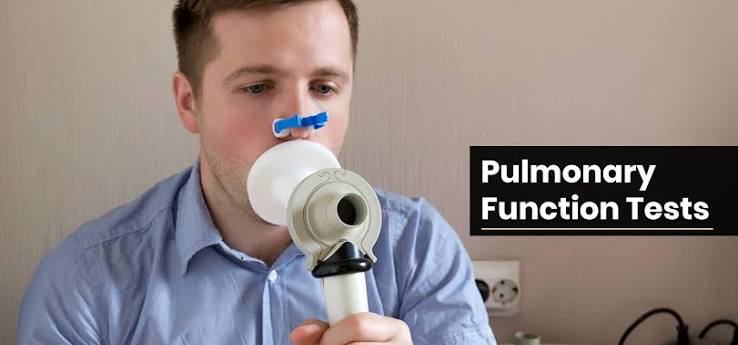
Pulmonary Function Test in Padur
PFT at AVR Scan Centre
If your doctor has recommended a Pulmonary Function Test in Padur, you may want to know what the test measures, why it has been advised and what to expect during the examination.
A Pulmonary Function Test (PFT) is a group of breathing tests used to assess how well your lungs are working. Depending on the type of test performed, it can provide information about airflow, the amount of air you can move in and out of your lungs and other aspects of respiratory function.
PFTs are commonly used when a doctor needs more information about breathing problems or wants to assess a known or suspected respiratory condition. The exact test performed depends on the clinical question.
AVR Scan Centre provides Pulmonary Function Test services in Padur for patients looking for respiratory diagnostic testing in and around the Padur and OMR region.
Quick Answer – What Is a Pulmonary Function Test?
A Pulmonary Function Test, or PFT, is a breathing test that measures different aspects of lung function, including how air moves through the lungs and how much air can be moved during specific breathing manoeuvres.
Depending on the examination, the test may include spirometry or other lung-function measurements. You may be asked to breathe normally, take a deep breath and then breathe out forcefully into specialised equipment while following the instructions of the healthcare professional.
The measurements can help a doctor assess your respiratory function and interpret whether further evaluation is needed.
PFT is a broader term than spirometry, so the exact measurements included can vary according to the test requested.
Where Can You Get a Pulmonary Function Test in Padur?
AVR Scan Centre provides Pulmonary Function Test services in Padur for patients looking for lung-function and respiratory testing in the Padur and OMR area.
AVR Scan Centre – Padur
Address:
Godrej Azure Elsa Plaza, #3, Ground Floor, Padur, Tamil Nadu – 603103.
Patients searching for local respiratory testing may also use terms such as:
- Pulmonary Function Test in Padur
- PFT Test in Padur
- Lung Function Test in Padur
- Spirometry Test in Padur
- PFT Centre near Padur
- Lung Test near OMR
Before visiting, confirm the specific PFT available, appointment availability, current charges and any preparation instructions for your examination.
If you have previous lung-function reports or relevant respiratory records, ask whether they should be brought for comparison or clinical reference.
Why Is a Pulmonary Function Test Recommended?
A doctor may recommend a PFT when they need objective information about how your lungs and airways are functioning. The test can be useful when symptoms, examination findings or an existing respiratory condition require further assessment.
A PFT may be considered when evaluating:
- Persistent breathing difficulty or shortness of breath
- Ongoing cough or wheezing
- Suspected or known respiratory conditions
- Changes in breathing or lung function over time
- Response to certain respiratory treatments
- Lung function before selected treatments or procedures when clinically indicated
The reason for testing is not the same for every patient. A doctor may request a PFT to investigate symptoms, establish a baseline, monitor an existing condition or obtain additional information during a respiratory assessment.
A PFT result needs to be interpreted along with your symptoms, medical history and other clinical findings. The test is one part of the overall respiratory evaluation rather than a diagnosis by itself.
What Does a PFT Measure?
A PFT can measure different aspects of breathing, depending on the specific pulmonary function test performed. These measurements help describe how air moves through the airways and how much air the lungs can move during particular breathing manoeuvres.
For example, spirometry can provide measurements such as:
Airflow
The test can assess how quickly and effectively air is expelled from the lungs during a forced breathing manoeuvre.
Forced Vital Capacity
FVC refers to the amount of air that can be forcefully exhaled after taking a full breath in, as measured during spirometry.
Forced Expiratory Volume
FEV1 refers to the amount of air exhaled during the first second of a forced exhalation.
Other Lung-Function Measurements
Depending on the PFT protocol, additional measurements may provide information about lung volumes or other aspects of respiratory function.
These measurements are not interpreted separately in every case. The overall pattern, the quality of the test and appropriate reference values are considered when assessing lung function.
How Should You Prepare for a Pulmonary Function Test?
A PFT usually requires simple preparation, but the exact instructions can depend on the type of test and why it has been requested. Following the instructions provided by your doctor or the testing centre can help ensure that the breathing measurements are obtained under the intended conditions.
Before the test, you may be advised to:
- Wear comfortable clothing that does not restrict your chest or abdomen.
- Avoid a heavy meal shortly before testing if instructed.
- Avoid smoking before the examination when advised.
- Bring previous lung-function reports or relevant respiratory records when requested.
- Inform the healthcare team about your current symptoms and medical history.
Do not stop inhalers or other respiratory medicines on your own. Some PFT protocols may require specific instructions about medicines, while in other situations you may be asked to continue them normally. The correct approach depends on the reason for the test and the measurements being assessed.
If you have received specific preparation instructions, follow those instructions rather than applying general advice found online.
What Happens During a Pulmonary Function Test?
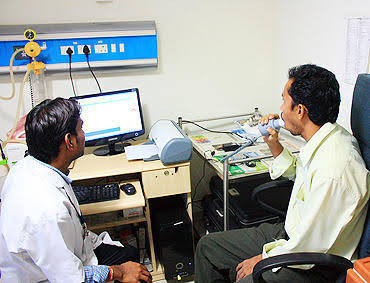
During a PFT, you breathe into specialised equipment while following specific instructions from the healthcare professional. The aim is to record consistent breathing measurements that can be assessed as part of your lung-function evaluation.
The examination may involve:
- The healthcare professional explains how to perform the breathing manoeuvres.
- You are positioned comfortably for the test.
- A mouthpiece is used to connect you to the testing equipment.
- A nose clip may be used when required for the particular measurement.
- You may first be asked to breathe normally.
- You may then take a deep breath and breathe out forcefully or perform another manoeuvre as instructed.
- The measurements may be repeated to obtain acceptable and consistent results.
- Additional breathing measurements may be performed depending on the PFT requested.
Your technique and effort can affect the quality of the measurements. This is why it is important to listen carefully to the instructions and perform each breathing manoeuvre as demonstrated.
If the test includes repeated attempts, this does not necessarily mean that something is wrong. Repetition can be part of obtaining reliable measurements.
Is a Pulmonary Function Test Difficult or Uncomfortable?
A PFT is non-invasive, but some breathing manoeuvres can feel physically demanding because you may need to inhale deeply and exhale forcefully.
During the test, you may experience:
- Temporary breathlessness after a forceful breathing manoeuvre
- Coughing
- Feeling tired from repeated efforts
- Mild light-headedness in some situations
These sensations generally relate to the effort required for the breathing manoeuvres rather than to an invasive procedure.
You should tell the healthcare professional if you feel significantly unwell, dizzy, uncomfortable or unable to continue. The test can be paused or adjusted when necessary.
The goal is not simply to blow as hard as possible without guidance. The measurements need to be obtained using the appropriate technique for the test being performed.
How Long Does a Pulmonary Function Test Take?
The time required for a PFT depends on the type of pulmonary function test being performed and the number of measurements required.
A basic breathing assessment such as spirometry may be relatively brief, while a broader pulmonary function evaluation can require additional measurements and therefore take longer.
The examination may also take additional time when:
- Several attempts are needed for acceptable measurements.
- The healthcare professional needs to repeat a breathing manoeuvre.
- More than one type of lung-function measurement is requested.
- Additional testing is included as part of the prescribed PFT protocol.
There is no single fixed duration for every PFT. When booking at AVR Scan Centre, confirm the expected appointment duration for the specific pulmonary function test recommended by your doctor.
What Can a Pulmonary Function Test Tell You About Your Lungs?
A Pulmonary Function Test can provide information about how air moves through the airways and how effectively the lungs perform specific breathing tasks. The findings can help a doctor assess whether the measured breathing pattern is within the expected range or whether further evaluation may be needed.
Depending on the PFT performed, the assessment may provide information about:
- Airflow during forced breathing
- The amount of air moved during specific manoeuvres
- The relationship between different breathing measurements
- Patterns that may suggest airflow limitation
- Changes in lung function when results are compared over time
The report is not interpreted from one value alone. The healthcare professional considers the quality of the test, the patient's symptoms, medical history and appropriate reference values when assessing the findings.
An unusual PFT pattern does not automatically identify one specific lung disease. If the results raise a concern, your doctor may consider your clinical history and decide whether additional testing is appropriate.
What Is the Difference Between PFT and Spirometry?
Spirometry is one type of pulmonary function test, while PFT is a broader term that can include different measurements of lung function.
Spirometry mainly assesses how much air you can exhale and how quickly you can exhale it during specific breathing manoeuvres. Measurements such as FEV1 and FVC are commonly obtained during spirometry.
A broader pulmonary function evaluation may involve additional measurements depending on the clinical question.
Whether contrast is required depends on:
- Body part being examined
- Suspected condition
- Clinical question
- CT protocol
- Doctor's recommendation
What Is 3D Reconstruction in CT?
3D reconstruction uses CT imaging data to create a three-dimensional representation of selected anatomical structures.
Instead of viewing only individual cross-sectional images, appropriate CT data can be processed to provide a three-dimensional view.
Depending on the examination, 3D reconstruction can be useful for visualizing:
- Bones
- Facial structures
- Joints
- Spine structures
- Other anatomical regions
Whether 3D reconstruction is required depends on the examination and clinical purpose.
| Spirometry | Pulmonary Function Testing |
|---|---|
| A specific type of lung-function test | A broader group of lung-function assessments |
| Mainly evaluates airflow and forced breathing | May assess several aspects of respiratory function |
| Commonly includes FEV1 and FVC | Measurements depend on the PFT protocol |
| Often used to assess airflow patterns | May provide a wider respiratory assessment |
Therefore, “PFT” and “spirometry” should not always be treated as exactly the same test. The examination recommended by your doctor depends on the information needed for your respiratory assessment.
Can a PFT Detect Asthma or COPD?
PFT can provide useful information when asthma or COPD is being evaluated, but the result is not interpreted by itself.
In asthma, lung-function testing can help assess airflow and may be used as part of the evaluation when symptoms suggest variable or reversible airway narrowing.
In COPD, pulmonary function testing, particularly spirometry, is an important part of assessing persistent airflow limitation when the clinical picture supports the diagnosis.
However, breathing symptoms can have several causes. A PFT result needs to be considered along with symptoms, medical history, examination findings and other relevant information.
In some situations, additional testing or repeat testing may be appropriate. A normal result at one point in time does not necessarily answer every respiratory question, particularly when symptoms vary.
What Do FEV1 and FVC Mean in a PFT Report?
FEV1 and FVC are two important measurements commonly reported when spirometry is performed.
FEV1
FEV1 means Forced Expiratory Volume in the first second. It refers to the amount of air exhaled during the first second of a forced breath out after taking a full breath in.
FVC
FVC means Forced Vital Capacity. It refers to the total amount of air that can be forcefully exhaled after taking a full breath in, as measured during the manoeuvre.
Why Are They Considered Together?
The relationship between FEV1 and FVC can provide information about the pattern of airflow during forced exhalation.
However, there is no single FEV1 or FVC number that can be labelled normal for every person. Interpretation depends on factors such as age, sex, height and the reference standards used for the test.
If you receive a PFT report, avoid diagnosing yourself from one percentage or value. Your doctor or qualified healthcare professional should interpret the measurements in the context of your symptoms and the complete report.
Can Everyone Have a Pulmonary Function Test?
Most people can undergo an appropriate form of pulmonary function testing, but the test may not be suitable at every time or in every medical situation.
The healthcare professional may consider factors such as:
- Current breathing symptoms
- Recent illness or changes in health
- Existing heart or lung conditions
- Ability to follow the breathing instructions
- Physical ability to perform the required manoeuvres
- The reason the test has been requested
Someone with severe current symptoms or a condition that makes forceful breathing inappropriate may require assessment before testing proceeds.
Tell the healthcare team about your current health problems rather than assuming that you should complete the test regardless of how you feel. The appropriate approach depends on the individual's clinical situation.
How Much Does a PFT Cost in Padur?
The cost of a Pulmonary Function Test in Padur can vary depending on the type of PFT performed and the diagnostic centre.
A basic spirometry examination and a broader pulmonary function evaluation may not have the same charge because the measurements and testing requirements can differ.
Before booking, confirm:
- The exact PFT requested
- Current examination cost
- Whether reporting is included
- Appointment availability
- Any centre-specific preparation instructions
For the current PFT price at AVR Scan Centre, contact the Padur centre directly, as prices and service details can change.
What Should You Check Before Booking a PFT in Padur?
Before booking, confirm the exact pulmonary function test recommended by your doctor, as “PFT” can refer to different types of respiratory measurements.
It is useful to check:
- The specific PFT or spirometry examination required
- Whether a referral or prescription is needed
- Preparation instructions
- Instructions regarding inhalers or other medicines
- Appointment availability
- Current examination charges
- Whether previous lung-function reports should be brought
If you currently have significant breathing difficulty or another new health concern, mention it when arranging the appointment.
Good preparation starts with confirming the exact test and following the instructions provided for that examination.
What Happens After a Pulmonary Function Test?
After the breathing measurements are completed, the recorded results are reviewed and the findings are documented in the PFT report. The quality of the breathing manoeuvres is also important because the interpretation depends on whether the test was performed adequately.
The completed assessment may include information from:
- The breathing manoeuvres performed
- Airflow measurements
- Lung-volume measurements, when included
- Repeated attempts used to obtain reliable results
- Other measurements included in the requested PFT protocol
Once the measurements have been recorded, they can be assessed against appropriate reference values.
The report should then be considered together with your symptoms, medical history and the reason the test was requested. If the findings require clarification, your doctor may recommend additional respiratory assessment or another investigation.
A PFT report therefore provides objective breathing measurements, but the clinical meaning of those measurements depends on the complete patient picture.
How Is a PFT Report Interpreted?
A PFT report is interpreted by looking at the overall pattern of lung-function measurements rather than focusing on one number alone.
Depending on the type of test, the report may contain measurements related to:
- Forced breathing and airflow
- FEV1
- FVC
- The relationship between FEV1 and FVC
- Lung volumes or other measurements when performed
- Comparison with appropriate reference values
The healthcare professional also considers whether the test quality was acceptable and whether the results fit the patient's symptoms and medical history.
For example, a value that appears lower or higher than expected on its own does not necessarily establish a particular lung condition.Age, height, sex, reference standards and the clinical reason for testing can all affect how the measurements are interpreted.
If you are unsure about a term or value in your report, discuss the complete report with the doctor who is managing your respiratory care rather than trying to diagnose the condition from an isolated number.
What Does an Abnormal PFT Result Mean?
- The patient's symptoms
- Medical and respiratory history
- Smoking or environmental exposure history when relevant
- Clinical examination
- Previous lung-function results
- Other investigations
Some breathing patterns can occur in more than one respiratory condition, while symptoms can also have causes that are not fully explained by a PFT.
For this reason, an abnormal PFT should be treated as information that may require clinical interpretation, not as a diagnosis by itself.
If your report recommends further assessment, follow up with your doctor to understand what the finding means in your particular situation.
Why Choose AVR Scan Centre for a Pulmonary Function Test in Padur?
When looking for a Pulmonary Function Test Centre in Padur, patients may consider the availability of the required respiratory test, location and ease of arranging an appointment.
AVR Scan Centre provides Pulmonary Function Test services in Padur for patients seeking lung-function testing in and around the Padur and OMR region.
The centre can be considered by patients looking for a local diagnostic facility for respiratory testing and other diagnostic services.
For centre-specific information such as current pricing, appointment availability, reporting time, equipment specifications, staff credentials or accreditation, confirm the details directly with AVR Scan Centre.
Pulmonary Function Test in Padur – Questions Patients Commonly Search
Preparation can vary according to the type of PFT and the instructions provided by the testing centre. If you have been given specific food or drink instructions, follow them. Avoid making major changes to your usual routine based only on general information online.
Do not stop or change your inhaler use without specific instructions. Some PFT protocols may require certain medicines to be withheld for a defined period, while other tests may be performed while you continue your regular treatment. Follow the instructions given for your particular examination.
Yes, some children can undergo pulmonary function testing when they are able to understand and perform the required breathing manoeuvres. The suitability of the test depends on the child's age, ability to cooperate and the reason the test has been requested.
A cough does not automatically mean that a PFT cannot be performed, but the reason and severity of the cough may matter. Tell the healthcare team about your symptoms before testing so they can determine whether the examination should proceed as planned.
A routine PFT generally does not involve sedation, but whether you should drive immediately afterward depends on your individual situation. If you feel unwell, dizzy or unusually breathless after testing, follow the advice provided by the healthcare team before driving.
Bring any relevant prescription, referral, previous lung-function reports or respiratory records requested by your doctor or testing centre. If you have been given specific preparation or medication instructions, keep those instructions available as well.
Yes. PFTs may be repeated when a doctor needs to monitor lung function, compare results over time or obtain reliable measurements. The reason and timing for repeat testing depend on the clinical situation.
Tell the healthcare professional if you are having difficulty performing the breathing manoeuvre. The instructions may be repeated, the attempt may be adjusted or another attempt may be made when appropriate. If a patient cannot perform a particular manoeuvre reliably, this can affect how the results are interpreted.
Book a Pulmonary Function Test at AVR Scan Centre, Padur
If you have been advised to undergo a Pulmonary Function Test in Padur, confirm the exact examination and any preparation requirements before your appointment.
Before visiting, confirm:
- The specific PFT or spirometry test required
- Appointment availability
- Current examination charges
- Any food or activity instructions
- Instructions regarding inhalers or other medicines
- Whether previous respiratory reports should be brought
Contact AVR Scan Centre – Padur to confirm the Pulmonary Function Test recommended for you and check the current appointment and pricing details.
AVR Scan Centre – Padur
Godrej Azure Elsa Plaza, #3, Ground Floor, Padur, Tamil Nadu – 603103.
