
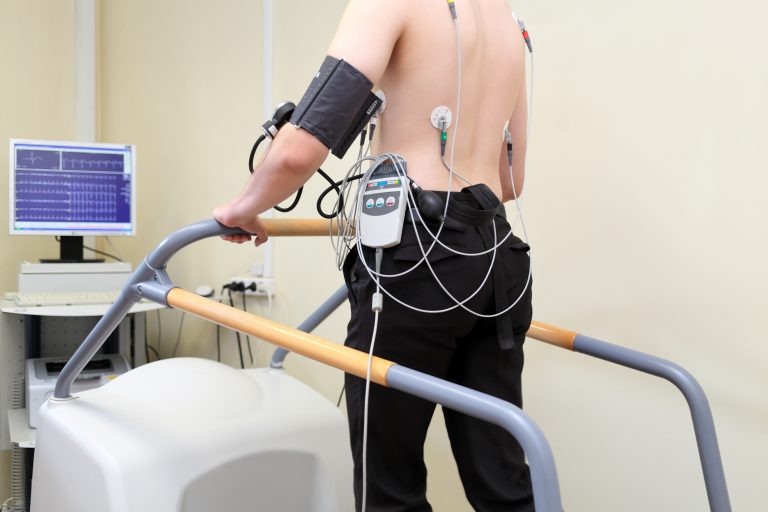
Treadmill Test in Padur
TMT at AVR Scan Centre
If your doctor has recommended a Treadmill Test in Padur, you may want to understand what the test involves, why it is performed and what information it can provide about your heart during exercise.
A Treadmill Test, also called a TMT or exercise stress test, monitors the heart while you walk on a treadmill with gradually increasing workload. Your heart's electrical activity is monitored through an ECG, while heart rate, blood pressure and symptoms are observed during the test.
Unlike a resting ECG, which records the heart while you are at rest, a TMT looks at how the heart responds when the body's demand for oxygen and blood flow increases during physical activity.
AVR Scan Centre provides Treadmill Test services in Padur for patients looking for cardiac diagnostic testing in and around the Padur and OMR region.
The test should be performed when clinically appropriate and interpreted along with your symptoms, medical history and other findings. A TMT is one part of cardiac assessment and is not a complete test for every type of heart condition.
What Is a Treadmill Test?
A Treadmill Test, or TMT, is an exercise-based cardiac test that monitors the heart's electrical activity while you walk on a treadmill and the workload gradually increases. During the test, ECG, heart rate, blood pressure and symptoms are monitored to assess how your heart responds to physical exertion.
A TMT can provide information that may not be visible on a resting ECG because the heart is being assessed while it is working harder.
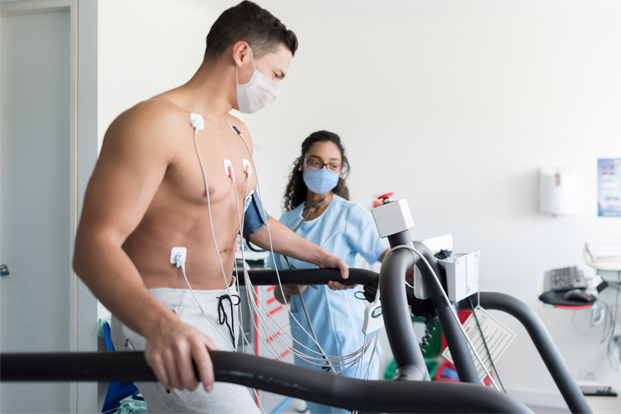
The test is performed under supervision, and the exercise level is adjusted according to the testing protocol and your response.
Where Can You Get a Treadmill Test in Padur?
AVR Scan Centre provides Treadmill Test services in Padur for patients looking for TMT and cardiac diagnostic testing in the Padur and OMR region.
AVR Scan Centre – Padur
Godrej Azure Elsa Plaza, #3, Ground Floor, Padur, Tamil Nadu – 603103.
The service may be relevant for people searching for:
- Treadmill Test in Padur
- TMT Test in Padur
- TMT Centre in Padur
- Exercise Stress Test in Padur
- Treadmill ECG Test near Padur
- TMT near OMR
Before visiting, confirm the TMT appointment availability, examination requirements and any preparation instructions applicable to your test.
If you have previous ECGs, cardiac reports or other relevant medical records, ask whether you should bring them for the appointment.
Why Is a Treadmill Test Recommended?
A doctor may recommend a TMT when information about the heart's response to physical activity can help evaluate a patient's symptoms or support a cardiac assessment.
Because the heart has to work harder during exercise, some changes may become noticeable only when the body's demand increases. A TMT may therefore be considered when a doctor wants to assess symptoms or heart function in relation to exercise.
Depending on the clinical situation, a doctor may recommend a treadmill test for:
- Chest discomfort or symptoms that occur during physical activity
- Breathlessness or unusual tiredness associated with exertion
- Palpitations or other symptoms that appear during exercise
- Assessment of exercise tolerance
- Evaluation of selected patients with suspected or known heart disease
- Further cardiac assessment when exercise-based information is clinically useful
The reason for ordering the test varies from patient to patient. A TMT should not be selected simply because a person has a particular symptom found through an online search.
Your doctor considers your symptoms, medical history, physical condition and other available findings before deciding whether an exercise stress test is appropriate.
What Does a TMT Measure During Exercise?
A TMT collects several types of information while the heart is exposed to progressively increasing physical workload. This allows the healthcare team to observe how your cardiovascular system responds as exercise becomes more demanding.
During the test, the team may monitor:
ECG and Heart Rhythm
The ECG records the heart's electrical activity during exercise. Changes in the tracing may provide information that is not present on a resting recording.
Heart Rate Response
Heart rate normally changes as exercise intensity increases. The response is observed throughout the test rather than relying only on the resting heart rate.
Blood Pressure
Blood pressure can change with exercise, so it may be monitored at different stages of the test to assess the cardiovascular response.
Exercise Capacity
The test also provides information about how much exercise you are able to perform under the prescribed protocol. Exercise duration and workload can be useful parts of the overall assessment.
Symptoms During Exercise
The healthcare team observes whether symptoms such as chest discomfort, unusual breathlessness, dizziness or significant fatigue occur during the test.
The recovery period is also important because the heart rate, blood pressure, symptoms and ECG response are considered as the heart returns toward its resting state.
A TMT report therefore involves more than simply recording how long someone walked. The overall response to exercise is considered when interpreting the test.
How Should You Prepare for a Treadmill Test?
Preparation for a Treadmill Test is usually focused on making sure you can exercise comfortably and that the monitoring equipment can record your heart's response clearly. Your doctor or the testing centre may provide specific instructions depending on why the test has been requested.
Before the appointment, you may be advised to:
- Wear comfortable clothing that allows you to walk freely.
- Choose suitable walking or sports footwear.
- Avoid strenuous exercise immediately before the test unless your doctor advises otherwise.
- Follow any instructions about food and drinks provided by the testing centre.
- Bring previous ECGs, cardiac reports or relevant medical records when requested.
- Tell the healthcare team about any symptoms or medical conditions that may affect exercise.
Do not stop heart or blood-pressure medicines on your own before a TMT. Some medicines can affect heart rate and the exercise response, so your doctor may give specific instructions about whether any medication should be taken as usual or adjusted before testing.
If you are unsure about food, medication or activity restrictions, confirm the instructions with the centre or the doctor who recommended the test rather than making changes yourself.
What Happens During a Treadmill Test?
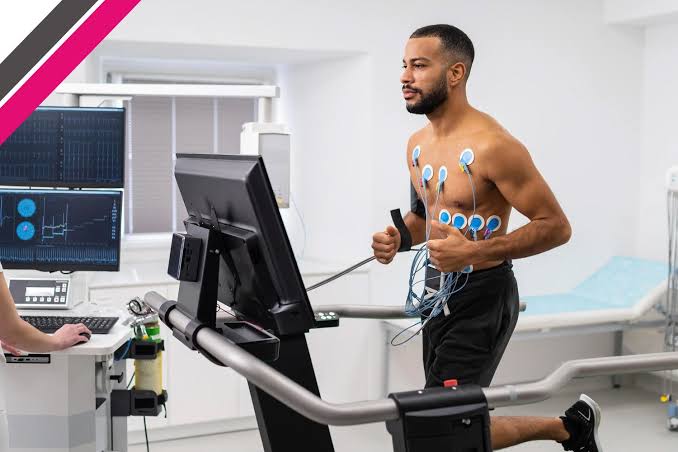
A TMT starts with a resting assessment and then gradually increases the level of exercise while your heart's response is monitored. The test is supervised throughout, and the workload is adjusted according to the testing protocol and your physical response.
The process generally includes:
- Your resting heart rate and blood pressure are checked.
- ECG electrodes are placed so your heart's electrical activity can be monitored.
- You begin walking on the treadmill at a comfortable initial workload.
- The treadmill speed or incline is gradually increased according to the test protocol.
- ECG, heart rate, blood pressure and symptoms are monitored as the workload increases.
- You are asked to report symptoms such as chest discomfort, unusual breathlessness, dizziness or significant fatigue.
- The exercise portion is stopped when the planned endpoint is reached or when the healthcare professional decides that it should be stopped.
- Your response during the recovery period is monitored after exercise.
You do not have to decide yourself when to increase the treadmill workload or when to stop the test. The healthcare team supervises the examination and evaluates your response throughout the exercise and recovery phases.
Is a Treadmill Test Painful or Difficult?
A Treadmill Test is not usually painful, but the exercise can become physically demanding as the workload increases.
You may experience normal effects of exercise such as:
- Increased breathing
- Sweating
- Faster heartbeat
- Leg or muscle fatigue
- Feeling physically tired
These sensations are different from symptoms that may require the test to be stopped. If you develop chest discomfort, significant breathlessness, dizziness, unusual weakness or another concerning symptom, tell the healthcare professional immediately.
You are not expected to push yourself beyond what is medically appropriate. The exercise workload is increased according to the test protocol and your response, and the healthcare team can stop the test when clinically necessary.
If walking becomes difficult because of fatigue or another physical limitation, inform the team rather than trying to continue without guidance.
Is a Treadmill Test Safe?
A Treadmill Test is performed under supervision with monitoring of the heart's response to exercise, but it is not appropriate for every person or every medical situation.
Before the test, the healthcare professional needs to know about relevant medical conditions, recent symptoms, medications and any difficulty with physical activity.
During the examination, the team monitors your:
- ECG
- Heart rate
- Blood pressure
- Exercise response
- Reported symptoms
- Recovery after exercise
The test can be stopped if concerning symptoms, significant changes in the monitored measurements or other clinical reasons arise.
Certain acute or unstable medical conditions may make exercise testing unsuitable or require a different approach. Your doctor or healthcare team should determine whether a TMT is appropriate for you based on your individual clinical situation.
What Can a Treadmill Test Show About Your Heart?
A Treadmill Test shows how your heart responds as physical activity gradually becomes more demanding. The result is based on the overall response during exercise and recovery rather than on a single measurement.
The assessment may consider:
- Changes in the ECG during exercise
- Heart-rate response to increasing workload
- Blood-pressure response
- Exercise duration and achieved workload
- Symptoms that develop during exercise
- How the heart responds during recovery
One of the main advantages of an exercise-based test is that it evaluates the heart under increased physical demand, rather than only at rest. This can provide information that may not be visible on a resting ECG.
However, the findings need to be interpreted in the context of your symptoms, medical history and other risk factors. A TMT result should not be viewed as a standalone diagnosis of overall heart health.
If the findings are unclear or suggest that further assessment is needed, your doctor may recommend another cardiac investigation.
Can a Treadmill Test Detect a Heart Blockage?
A TMT cannot directly see or locate a blockage in the coronary arteries. Instead, it can provide information about how the heart responds to exercise and whether the exercise response raises concern for reduced blood flow to the heart muscle.
During exercise, the heart needs more oxygen and blood supply. If the heart's response shows certain changes along with the clinical symptoms, the findings may lead the doctor to consider further evaluation.
An abnormal or concerning TMT does not automatically mean that a coronary artery is blocked. Depending on the individual situation, the doctor may recommend additional testing to investigate the cause.
Likewise, a normal TMT does not guarantee that a person has no coronary artery disease.
Further assessment may involve other investigations, depending on the patient's symptoms, risk factors and the reason the TMT was performed.
The TMT is therefore a functional exercise test, not a scan that directly displays the coronary arteries.
What Is the Difference Between a Resting ECG and a Treadmill Test?
A resting ECG records the heart's electrical activity while you are at rest, whereas a Treadmill Test records the heart's response as you exercise.
Both tests use ECG monitoring, but they answer different clinical questions.
| Resting ECG | Treadmill Test |
|---|---|
| Records the heart at rest | Records the heart during exercise |
| Usually performed while lying or sitting still | Requires walking on a treadmill |
| Provides a resting electrical snapshot | Shows how electrical activity changes with exertion |
| Does not require physical exercise | Workload increases during the test |
| Useful for resting rhythm and electrical assessment | Useful for assessing selected exercise-related responses |
A TMT is therefore not simply a longer version of a resting ECG. The key difference is that the heart is deliberately placed under controlled physical workload during the treadmill test.
Your doctor may recommend one test or both depending on the symptoms and information needed.
Can Everyone Have a Treadmill Test?
No. A TMT is not suitable for everyone, and the decision to perform an exercise test should be based on the patient's clinical condition and ability to exercise safely.
Before recommending a TMT, a doctor may consider:
- Current symptoms
- Existing heart conditions
- Recent medical events
- Blood pressure and other health factors
- Ability to walk and exercise
- Medications
- Other medical conditions that could affect exercise testing
A person who cannot walk adequately because of a physical limitation may need a different form of cardiac assessment.
Similarly, someone with an acute or unstable medical condition may require another approach rather than routine exercise testing.
Do not assume that being able to walk on a treadmill automatically means a TMT is appropriate for you. The healthcare professional ordering the test should determine whether it is suitable.
How Much Does a Treadmill Test Cost in Padur?
The cost of a Treadmill Test in Padur can vary depending on the diagnostic centre and the services included with the examination.
Before booking, confirm the current TMT charge and ask whether the stated price covers the examination and report or whether any additional consultation or investigation is separate.
It is useful to confirm:
- Current TMT price
- Appointment availability
- Preparation instructions
- Whether a doctor's referral is required
- Whether previous cardiac reports should be brought
For the current Treadmill Test price at AVR Scan Centre, contact the Padur centre directly rather than relying on an outdated online price.
What Should You Check Before Booking a TMT in Padur?
Before arranging a TMT, confirm why the test has been recommended and whether there are any specific instructions for your appointment.
You should clarify:
- The TMT recommended by your doctor
- Whether you need any specific food or activity restrictions
- Instructions regarding your regular medicines
- Suitable clothing and footwear
- Appointment availability
- Current examination cost
- Whether previous ECGs or cardiac reports should be brought
If you have difficulty walking, significant physical limitations or another condition that may affect exercise, mention this before the appointment.
The goal is to make sure the planned test is appropriate for the clinical question and that you arrive prepared for supervised exercise testing.
What Happens After a Treadmill Test?
After the exercise portion is completed, you enter a recovery period while your heart's response is monitored. The recovery phase is an important part of the examination because the healthcare team may continue observing the ECG, heart rate, blood pressure and any symptoms after the treadmill exercise has stopped.
The information collected during the complete test may include:
- Your resting measurements
- Exercise response
- ECG changes during activity
- Symptoms experienced during exercise
- Blood-pressure response
- Heart-rate response
- Recovery after exercise
Once the necessary information has been recorded, the findings can be compiled into the TMT report.
The report is then considered in relation to why the test was requested, your symptoms, medical history and other available clinical information.
If the findings require further evaluation, your doctor may recommend another cardiac investigation. The next step depends on the overall clinical picture rather than on one TMT measurement alone.
How Is a Treadmill Test Report Interpreted?
A TMT report is interpreted by considering how the heart responded to increasing exercise and how it recovered after the exercise ended. The report is not based solely on how long a person walked or how fast the heart rate became.
Depending on the test and reporting format, the assessment may consider:
- Exercise duration and workload achieved
- Heart-rate response
- Blood-pressure response
- ECG changes during exercise
- Symptoms reported during the test
- Recovery response
- The overall exercise-test pattern
The findings are then considered together with the patient's medical history and reason for testing.
For example, a particular ECG change may have a different clinical significance depending on the patient's symptoms and underlying risk factors. This is why a TMT report should not be interpreted by looking at one number or phrase in isolation.
If the result is unclear or raises a clinical concern, your doctor may recommend additional testing to obtain more information.
What Does an Abnormal TMT Result Mean?
An abnormal TMT result means that the exercise response showed findings that may require further clinical assessment; it does not automatically mean that a coronary artery is blocked.
A TMT can produce findings that need to be interpreted alongside symptoms, medical history and other risk factors.
In some situations, the result may lead the doctor to investigate whether reduced blood flow to the heart could be contributing to the exercise response.
Further assessment may involve other cardiac tests depending on the individual situation.
It is also important to understand that exercise stress testing has limitations. A result that is not clearly normal does not establish a specific diagnosis by itself, and a normal result does not guarantee the absence of every form of heart disease.
If your TMT report recommends further evaluation, discuss the finding with your doctor rather than trying to determine its meaning from the report alone.
Why Choose AVR Scan Centre for a Treadmill Test in Padur?
When choosing a Treadmill Test Centre in Padur, patients may consider whether the required cardiac test is available locally, whether the appointment process is convenient and whether the centre is accessible from their area.
AVR Scan Centre provides Treadmill Test services in Padur for patients looking for TMT and cardiac diagnostic testing in and around Padur and the OMR region.
The Padur centre also provides other diagnostic services that may be relevant when additional investigations are recommended by a healthcare professional.
For centre-specific information such as current pricing, appointment availability, reporting time, equipment details, specialist credentials or accreditation, confirm the information directly with AVR Scan Centre rather than relying on unverified online claims.
Treadmill Test in Padur – Questions People Often Ask
You may be able to communicate with the healthcare professional during the test, particularly if you experience discomfort or another symptom. However, you should follow the instructions given during the examination so that monitoring can be performed properly.
You do not necessarily have to complete every stage of the treadmill protocol. The test may be stopped when the planned endpoint is reached, when you develop significant symptoms or when the healthcare professional determines that continuing is not appropriate.
Your ability to complete the test is considered as part of the overall result.
Yes. A treadmill test may be stopped before the planned final stage if you develop concerning symptoms, reach a clinically appropriate endpoint or the healthcare professional decides that further exercise is not advisable.
You should not try to continue through significant symptoms simply to complete the test.
Whether you can drive immediately afterward depends on your condition and the circumstances of the test. Most people undergo a short recovery period after exercise, but follow the instructions given by the healthcare team, particularly if you experienced symptoms during testing.
If you have previous ECGs or cardiac reports, it is useful to ask whether they should be brought to the appointment. Earlier records can provide relevant background when your doctor interprets the current cardiac assessment.
Not everyone who has difficulty walking is suitable for a conventional treadmill test. Your doctor may consider your ability to exercise safely and whether another form of cardiac assessment would provide more useful information.
Tell the healthcare team about any physical limitation before the test is scheduled.
Many people can return to their usual routine after the recovery period, but this depends on how the test went and whether any symptoms occurred. Follow the specific advice given by the healthcare professional who performed or requested the test.
Book a Treadmill Test at AVR Scan Centre, Padur
If you have been advised to undergo a Treadmill Test in Padur, confirm the test requirements before your appointment so you can arrive prepared for supervised exercise testing.
Before visiting, confirm:
- TMT appointment availability
- Current examination cost
- Preparation instructions
- Medication instructions provided by your doctor
- Whether previous ECG or cardiac reports should be brought
Need a TMT in Padur?
Contact AVR Scan Centre – Padur to confirm the Treadmill Test recommended for you and check the current appointment and pricing details.
Contact AVR Scan Centre – Padur to confirm the Treadmill Test, appointment availability and current pricing details.
AVR Scan Centre – Padur
Godrej Azure Elsa Plaza, #3, Ground Floor,
Padur, Tamil Nadu – 603103.
