
PFT Test in Sholinganallur
Pulmonary Function Testing at AVR Scan Centre
If your doctor has recommended a Pulmonary Function Test (PFT), you may want to understand what the test measures, how it is performed, how to prepare, whether the test is comfortable and what the results can tell your healthcare professional about your breathing.
A Pulmonary Function Test is a group of breathing tests used to assess how well the lungs are working. Depending on the specific examination, PFT can provide information about how much air you can breathe in and out, how quickly you can move air and other aspects of respiratory function.
PFT is commonly used as part of the evaluation of breathing-related symptoms and respiratory conditions. The exact test performed depends on the clinical question and the assessment recommended by your healthcare professional.
If you are searching for a Pulmonary Function Test in Sholinganallur, understanding the examination beforehand can help you follow the correct preparation and appointment instructions.
What Is a Pulmonary Function Test?
A Pulmonary Function Test (PFT) evaluates aspects of lung and breathing function by measuring how you breathe and move air through your respiratory system.
Different pulmonary function measurements can provide information about:
- The amount of air you can breathe
- How quickly you can exhale
- Your breathing pattern
- Airflow during forced breathing
- Changes in breathing measurements after specific interventions, when clinically required
- Other aspects of respiratory function depending on the test performed
PFT is not necessarily a single measurement. The examination can involve different breathing manoeuvres and measurements depending on the test protocol.
One of the commonly used components of pulmonary function testing is spirometry, which measures airflow and the amount of air moved during breathing.
What Does a PFT Test Measure?
A PFT can measure different aspects of breathing, including the volume of air moved by the lungs and the speed at which air can be inhaled or exhaled.
The exact measurements depend on the pulmonary function test being performed.
Breathing measurements can help healthcare professionals assess patterns of lung function and understand whether further respiratory evaluation may be appropriate.
The results are considered together with the patient's:
- Symptoms
- Medical history
- Physical examination
- Age
- Relevant clinical information
- Other respiratory investigations
PFT results should not be interpreted in isolation.
What Is Spirometry?
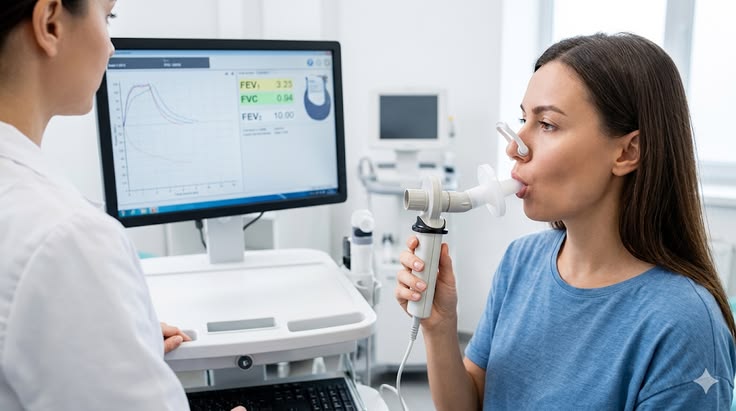
Spirometry is a common pulmonary function test that measures how much air a person can exhale and how quickly they can exhale it.
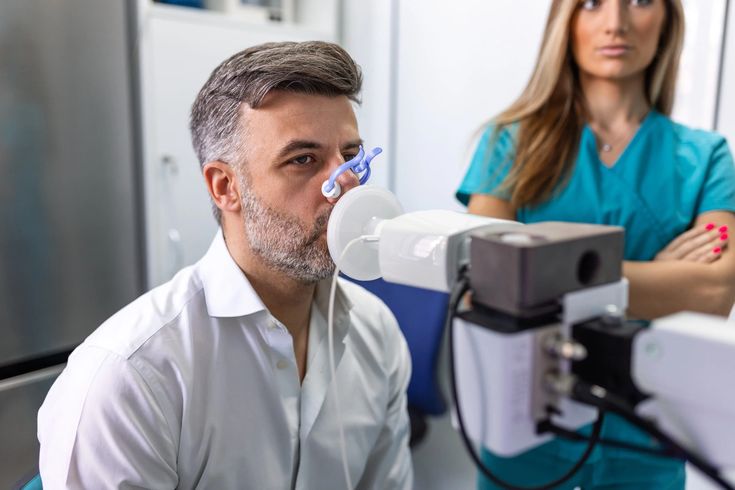
During spirometry, you breathe into a mouthpiece connected to the testing equipment.
You may be asked to take a deep breath and then breathe out as forcefully and completely as instructed.
The equipment records the airflow and volume produced during the breathing manoeuvre.
Because the quality of the effort can affect the recording, you may be asked to repeat the manoeuvre several times.
Why Is a Pulmonary Function Test Recommended?
A healthcare professional may recommend PFT when information about lung function could help evaluate breathing-related symptoms or monitor respiratory health.
A PFT may be considered when a person has symptoms such as:
- Breathlessness
- Persistent cough
- Wheezing
- Reduced exercise tolerance
- Difficulty breathing during physical activity
- Other respiratory symptoms
PFT may also be used when a healthcare professional needs objective information about lung function as part of an ongoing respiratory assessment.
The reason for testing varies from person to person.
A Pulmonary Function Test should be performed according to your healthcare professional's recommendation rather than selected solely from an online search.
What Can a Pulmonary Function Test Help Evaluate?
PFT provides objective measurements of breathing function that can support the clinical evaluation of respiratory problems.
Depending on the test performed and the clinical situation, PFT may contribute to the assessment of conditions associated with:
- Airflow limitation
- Breathing difficulties
- Reduced lung function
- Persistent respiratory symptoms
- Changes in lung function over time
PFT can also provide measurements that may help a healthcare professional monitor respiratory function when repeat testing is clinically appropriate.
The test result is only one part of the overall assessment.
How Does a Pulmonary Function Test Work?
During a PFT, you perform specific breathing manoeuvres while connected to testing equipment that measures airflow and other relevant breathing parameters.
For spirometry, you normally breathe through a mouthpiece.
The equipment records the movement of air during the breathing manoeuvre.
The healthcare professional or trained technician may demonstrate the breathing technique before you begin.
You may need to repeat certain manoeuvres to obtain technically suitable measurements.
Following the instructions carefully is important because an incomplete or inconsistent breathing effort can affect the quality of the test recording.
What Happens During a PFT Test?
A Pulmonary Function Test generally involves several stages.
Pre-Test Information
The healthcare team may ask about your symptoms, respiratory history, current medicines and the reason the test has been requested.
Test Instructions
You will be shown how to use the mouthpiece and how to perform the required breathing manoeuvre. The technician may explain when to breathe normally, when to take a deep breath and when to exhale forcefully.
Breathing Measurements
You will breathe into the testing equipment while the system records relevant measurements.
Repeated Manoeuvres
You may be asked to repeat the breathing manoeuvre more than once. Repeated measurements can help the healthcare team assess the consistency and quality of the recording.
Additional Measurements When Required
Depending on the prescribed PFT protocol, additional breathing measurements or procedures may be performed.
Completion
Once the required measurements have been obtained, the test is completed and the recorded information can be reviewed as part of the reporting process.

Is a Pulmonary Function Test Difficult?
A PFT requires active participation because you need to follow breathing instructions during the examination.
The test itself is generally non-invasive.
You may be asked to breathe deeply or exhale forcefully several times, which can feel tiring for a short period.
It is important to follow the technician's instructions as closely as possible.
If you feel uncomfortable, dizzy or unusually breathless during the examination, tell the healthcare team.
Who May Need a Pulmonary Function Test?
A healthcare professional may recommend a PFT when objective information about breathing function is needed.
The test may be considered for people with:
- Ongoing respiratory symptoms
- Unexplained breathlessness
- Persistent cough
- Wheezing
- Reduced exercise tolerance
- A known respiratory condition requiring assessment
- A need to monitor lung function over time
The decision to perform PFT depends on the individual's clinical situation.
Not everyone with a cough or breathing difficulty necessarily needs a PFT.
Your healthcare professional can determine whether the examination is appropriate.
Pulmonary Function Test in Sholinganallur
If you have been advised to undergo a Pulmonary Function Test in Sholinganallur, confirm the specific PFT examination and preparation requirements before your appointment.
Because different breathing tests can have different instructions, it is important to follow the instructions provided for your particular examination.
Before visiting, confirm:
- The specific PFT required
- Appointment availability
- Whether any medicines need special instructions
- Whether you should avoid strenuous activity before the test
- Whether you should avoid smoking before the test
- Whether previous respiratory reports should be brought
- Expected appointment duration
Do not stop prescribed medicines unless your healthcare professional specifically tells you to do so.
Pulmonary Function Testing at AVR Scan Centre
AVR Scan Centre provides Pulmonary Function Test services for patients who have been advised to undergo lung function assessment.
The examination involves breathing measurements performed using appropriate pulmonary function testing equipment and instructions.
Before your appointment, contact the centre to confirm the availability of the specific PFT recommended for you and to understand any preparation requirements.
What Should You Know Before Booking a PFT?
Before scheduling a PFT Test in Sholinganallur, make sure you understand the examination requested by your healthcare professional.
Confirm:
- The type of pulmonary function test
- Appointment availability
- Preparation instructions
- Medication instructions, if applicable
- Whether smoking or strenuous exercise should be avoided before the test
- Whether previous respiratory reports are required
- Expected appointment duration
Having this information in advance can help you arrive prepared and avoid unnecessary delays.
How Should You Prepare for a Pulmonary Function Test?
PFT preparation depends on the specific pulmonary function test being performed and the instructions provided for your appointment.
Because some factors can temporarily affect breathing measurements, it is important to follow the preparation instructions given by your healthcare professional or the diagnostic centre.
Before your appointment, confirm the exact requirements for your examination.
Follow Your Medication Instructions
Tell the healthcare team about all medicines you currently take. Some medicines may affect breathing measurements, and your healthcare professional may provide specific instructions about whether any medicine should be taken as usual before the test.
Do not stop, skip or change prescribed medication on your own. Follow only the medication instructions given specifically for your examination.
Avoid Smoking Before the Test
If you smoke, ask the healthcare team whether you should avoid smoking before your PFT. Smoking shortly before a breathing test may affect respiratory measurements. Follow the instructions provided for your appointment.
Avoid Heavy Meals Before Testing
You may be advised to avoid a heavy meal shortly before certain pulmonary function tests. A large meal can make deep breathing or forceful breathing manoeuvres uncomfortable. The exact food and drink instructions can vary, so follow the instructions provided for your particular PFT.
Wear Comfortable Clothing
Wear comfortable clothing that does not significantly restrict movement around your chest or abdomen. Because PFT involves controlled breathing manoeuvres, comfortable clothing can make the examination easier.
Avoid Unusually Strenuous Exercise
Ask whether you should avoid strenuous physical activity before your appointment. Intense exercise shortly before testing can temporarily influence breathing measurements. Follow the preparation instructions provided by the healthcare team.
What Should You Tell the Healthcare Team Before a PFT?
Before the test begins, provide relevant information about your respiratory health and the reason the examination was requested.
Tell the healthcare team about:
- Breathlessness
- Persistent cough
- Wheezing
- Reduced exercise tolerance
- Previous lung conditions
- Current respiratory medicines
- Smoking history
- Previous pulmonary function tests
- Other relevant medical conditions
- Recent respiratory symptoms or illness
If your symptoms occur only during exercise, explain this to the healthcare professional.
Accurate information about your symptoms and medical history helps the PFT findings be considered in the appropriate clinical context.
What Happens During a Pulmonary Function Test?
A PFT generally involves a series of breathing measurements.
Pre-Test Assessment
The healthcare team may confirm the reason for the test and ask about your respiratory symptoms, medical history and current medicines.
Instructions From the Technician
The technician explains how to breathe into the testing equipment. You may be shown how to position your mouth around the mouthpiece and how to perform the required breathing manoeuvre.
Normal Breathing
Depending on the test protocol, you may initially be asked to breathe normally through the equipment.
Deep Breathing
You may be asked to take a deep breath before performing a specific breathing manoeuvre.
Forceful Exhalation
For spirometry, you may be instructed to exhale as forcefully and completely as possible. Following the instructions carefully is important for obtaining technically suitable measurements.
Repeated Measurements
The breathing manoeuvre may be repeated several times. Repeating the test helps the healthcare team assess the consistency of the measurements and obtain an appropriate recording.
Additional Testing When Required
Depending on the prescribed pulmonary function test, additional measurements or procedures may be performed. The exact process varies according to the type of PFT requested.
Is a Pulmonary Function Test Painful?
A PFT is generally a non-invasive breathing examination and does not normally involve pain.
However, the test can require repeated deep breaths and forceful exhalation.
You may temporarily experience:
- Tiredness
- Mild breathlessness
- Light-headedness
- A need to pause between breathing manoeuvres
Tell the healthcare team if you feel uncomfortable or develop significant symptoms during the test.
The technician can determine whether you should rest before continuing.
Can You Feel Breathless During a PFT?
You may feel temporarily breathless during some PFT breathing manoeuvres because the test can require deep or forceful breathing.
This sensation can occur when you repeatedly inhale deeply or exhale forcefully.
The healthcare team monitors the examination and can provide appropriate instructions if you need to pause.
If you experience significant breathlessness, chest discomfort, dizziness or another concerning symptom, tell the healthcare team immediately.
How Long Does a Pulmonary Function Test Take?
The duration of a PFT varies depending on the type of test, the number of measurements required and the patient's ability to perform the breathing manoeuvres.
The appointment may include:
- Pre-test information
- Equipment setup
- Breathing instructions
- Initial measurements
- Repeated breathing manoeuvres
- Additional measurements when required
A straightforward spirometry examination may differ in duration from a more comprehensive pulmonary function assessment.
If you need to plan your schedule, contact the centre beforehand to confirm the expected duration of your specific examination.
What Happens After a Pulmonary Function Test?
After the required breathing measurements have been completed, the test is reviewed and the recorded information is prepared for interpretation.
Most patients can continue with their usual activities after the examination unless their healthcare professional provides different instructions.
If you experienced significant symptoms during the test, follow any advice provided by the healthcare team.
The PFT findings should be considered together with:
- Respiratory symptoms
- Medical history
- Physical examination
- Current medicines
- Previous lung function measurements
- Other relevant investigations
How Is a Pulmonary Function Test Report Interpreted?
A PFT report contains measurements that describe aspects of lung and breathing function.
Depending on the type of test performed, the report may include measurements related to:
- Airflow
- Air volume
- Expiratory performance
- Breathing capacity
- Other pulmonary function parameters
For spirometry, commonly reported measurements include FEV1 and FVC.
FEV1 refers to the amount of air exhaled during the first second of a forced breath.
FVC refers to the total amount of air that can be forcefully exhaled after taking a full breath.
The relationship between different measurements can provide useful information about airflow patterns.
PFT results should be interpreted using the appropriate reference information and in the context of the patient's clinical history.
What Do Abnormal PFT Results Mean?
An abnormal pulmonary function test result does not by itself establish a specific diagnosis.
Abnormal measurements may indicate that further clinical assessment is required.
The interpretation can depend on:
- Which measurements are abnormal
- The degree of the change
- The patient's age and other relevant characteristics
- Symptoms
- Medical history
- Current medicines
- Other respiratory investigations
Your healthcare professional can explain what the findings mean in relation to your individual clinical situation.
Do not self-diagnose a lung condition based only on a PFT number or report.
Can a PFT Diagnose Asthma?
PFT can provide useful information when asthma or another breathing disorder is being evaluated, but the diagnosis is based on the overall clinical assessment.
Spirometry and other pulmonary function measurements can help healthcare professionals assess airflow and changes in respiratory function.
Depending on the clinical situation, additional testing may be considered.
A PFT result should therefore be interpreted together with symptoms, medical history and other relevant findings.
Can a PFT Diagnose COPD?
Pulmonary function testing can provide important information when chronic airflow limitation is being evaluated, including in people being assessed for COPD.
Spirometry is commonly used to assess airflow limitation.
However, a diagnosis should not be made from an isolated number without considering the patient's symptoms, medical history and clinical assessment.
Your healthcare professional will determine the significance of the findings and whether additional evaluation is needed.
What Can Affect PFT Results?
Several factors can influence pulmonary function measurements.
These may include:
- How well you follow the breathing instructions
- Effort during forceful breathing
- Smoking before the examination
- Recent strenuous exercise
- Certain medicines
- Recent respiratory illness
- Age and other patient characteristics
- The technical quality of the test
This is why the healthcare team may repeat breathing manoeuvres and assess the quality of the recording before the results are interpreted.
PFT Test in Sholinganallur – What Should You Confirm Before Booking?
If you are searching for a PFT Test in Sholinganallur, confirm the exact examination and preparation requirements before visiting.
Check:
- The type of PFT requested
- Appointment availability
- Medication instructions
- Smoking-related preparation
- Food and drink instructions
- Exercise-related preparation
- Whether previous respiratory reports should be brought
- Expected appointment duration
Preparation can vary between pulmonary function tests, so follow the instructions provided for your specific examination.
Why Choose AVR Scan Centre for a Pulmonary Function Test?
When looking for a Pulmonary Function Test in Sholinganallur, patients generally want clear information about the test, preparation, appointment process and where the examination is available.
A PFT requires the patient to follow specific breathing instructions so that the required measurements can be recorded appropriately.
Pulmonary Function Testing
AVR Scan Centre provides Pulmonary Function Test services for patients who have been advised to undergo lung function assessment.
The test records breathing measurements that can help a healthcare professional assess aspects of respiratory function.
Clear Preparation Information
Before your appointment, confirm:
- The type of PFT requested
- Preparation instructions
- Medication-related instructions
- Whether smoking should be avoided before testing
- Whether strenuous exercise should be avoided
- Whether previous respiratory reports are required
- Expected appointment duration
Following the instructions provided for your specific examination can help ensure that you arrive properly prepared.
When Should You Discuss Breathing Symptoms?
If you have been advised to undergo a PFT, tell your healthcare professional about the symptoms you are experiencing.
These may include:
- Breathlessness
- Persistent cough
- Wheezing
- Shortness of breath during exercise
- Reduced exercise tolerance
- Recurrent respiratory symptoms
- Changes in your usual breathing pattern
If your symptoms have recently become severe or significantly different from usual, seek appropriate medical advice rather than relying on a routine diagnostic test appointment.
What Should You Check Before Booking a PFT?
Before booking a PFT Test in Sholinganallur, make sure you know which pulmonary function examination has been requested.
Confirm:
- The specific PFT required
- Appointment availability
- Preparation instructions
- Medication instructions
- Food and drink instructions, if applicable
- Smoking-related instructions
- Exercise-related instructions
- Whether previous respiratory reports should be brought
- Expected duration of the examination
Do not change your medication or preparation routine unless instructed by your healthcare professional.
Frequently Asked Questions About Pulmonary Function Test in Sholinganallur
A Pulmonary Function Test, or PFT, is a group of breathing tests used to assess different aspects of lung and respiratory function. Depending on the examination, it can measure airflow, air volume and other breathing parameters.
A PFT can provide objective information about breathing function and may be recommended when evaluating symptoms such as breathlessness, persistent cough, wheezing or reduced exercise tolerance.
Spirometry is a commonly used type of pulmonary function test. It measures how much air a person can exhale and how quickly they can exhale it. A broader PFT assessment may include additional measurements depending on the clinical requirement.
Preparation depends on the specific test. You may receive instructions about medicines, smoking, food, drinks or strenuous exercise before the examination. Follow the instructions given specifically for your appointment.
Medication instructions can vary. Tell the healthcare team about your current medicines and follow the instructions provided by your healthcare professional. Do not stop prescribed medication on your own.
A PFT is generally a non-invasive examination. You may experience temporary tiredness, mild breathlessness or light-headedness because some breathing manoeuvres require deep or forceful breathing. Tell the healthcare team if you feel uncomfortable.
The duration varies according to the type of pulmonary function test, the number of measurements required and how many breathing manoeuvres need to be performed. Contact the centre to confirm the expected duration of your specific examination.
FEV1 refers to the amount of air exhaled during the first second of a forced breath. FVC refers to the total amount of air that can be forcefully exhaled after taking a full breath. These measurements are interpreted together with other findings and clinical information.
PFT, particularly spirometry, can provide useful information when conditions involving airflow limitation are being evaluated. The diagnosis of asthma, COPD or another respiratory condition requires interpretation of the test together with symptoms, medical history and other clinical findings.
AVR Scan Centre provides Pulmonary Function Test services at its Sholinganallur centre. Contact the centre before visiting to confirm the availability of the specific PFT recommended for you and the preparation requirements.
Book a Pulmonary Function Test at AVR Scan Centre, Sholinganallur
If your healthcare professional has recommended a Pulmonary Function Test, confirm the specific examination and preparation requirements before your appointment.
A PFT depends on controlled breathing manoeuvres and accurate instructions, so following the preparation guidance for your particular test can help the examination proceed smoothly.
Before visiting, confirm:
- The required PFT
- Appointment availability
- Preparation instructions
- Medication instructions
- Any smoking or exercise restrictions
- Whether previous respiratory reports are required
- Expected appointment duration
Contact the centre to enquire about the Pulmonary Function Test in Sholinganallur, confirm availability and understand the preparation requirements for your prescribed examination.
AVR Scan Centre – Sholinganallur
First Floor, No. 278/1 & 278/2, Commercial Building, Ramanyam Pushkar 2, Kalaignar Karunanidhi Salai, Sholinganallur – 600119.
