
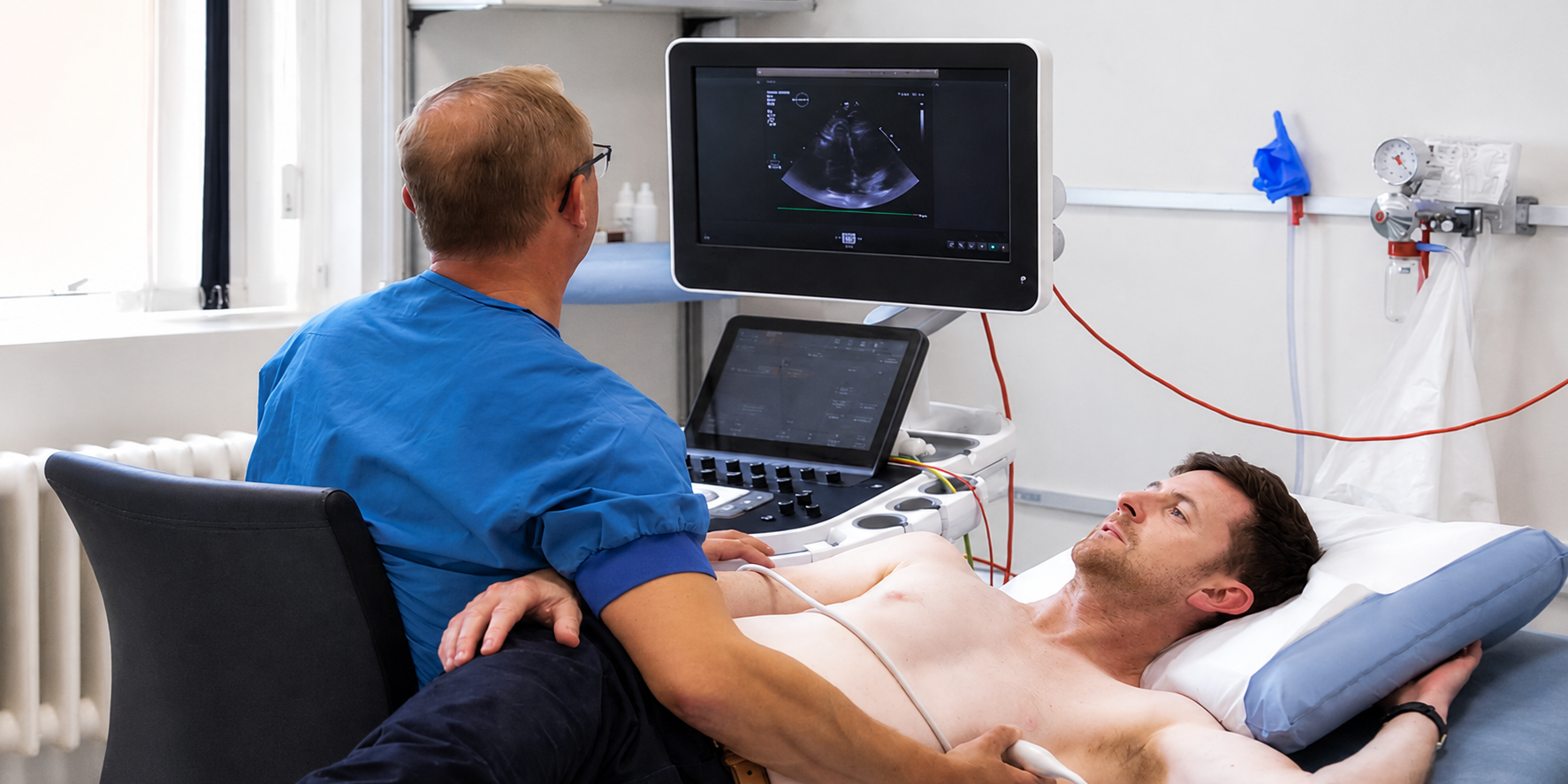
Echo Cardiogram in Thiruporur
Echo Test at AVR Scan Centre
If your doctor has recommended an Echo Cardiogram in Thiruporur, you may want to understand what the test is, why it is performed, what it can detect, whether it is painful, how to prepare and what happens during the examination.
An Echo Cardiogram, commonly known as an Echocardiogram or Echo Test, is a non-invasive ultrasound examination used to evaluate the structure and function of the heart. Unlike ECG, which records the heart's electrical activity, an echocardiogram creates real-time images of the heart using sound waves.
The examination allows healthcare professionals to assess the heart chambers, heart valves, blood flow patterns and pumping function. It is one of the most commonly used cardiac imaging tests because it provides valuable information without exposing patients to radiation.
At AVR Scan Centre, Thiruporur, Echo Cardiogram services are available for patients seeking cardiac imaging and heart function assessment as recommended by their healthcare provider.
Patients from Thiruporur, Kelambakkam, Padur, Navalur, Siruseri, Chengalpattu and surrounding OMR locations can conveniently access echocardiography services.
What Is an Echo Cardiogram?
An Echo Cardiogram is a diagnostic imaging examination that uses ultrasound technology to create moving images of the heart.
The test uses high-frequency sound waves that are transmitted into the body through a handheld device called a transducer. These sound waves reflect from the heart structures and are converted into images displayed on a monitor.
Unlike many other cardiac investigations, an echocardiogram provides direct visualization of the heart's anatomy and movement.
The examination may provide information about:
- Heart chambers
- Heart valves
- Heart muscle
- Blood flow through the heart
- Pumping function of the heart
- Certain structural heart abnormalities
Because the test is non-invasive and does not use radiation, it is widely used in cardiac assessment and follow-up.
Echo Cardiogram in Thiruporur – Where Can You Get an Echo Test?
If you are searching for an Echo Cardiogram in Thiruporur , AVR Scan Centre provides echocardiography services for patients requiring cardiac imaging and heart function evaluation.
The centre serves patients from:
- Thiruporur
- Kelambakkam
- Padur
- Navalur
- Siruseri
- Egattur
- Chengalpattu
- OMR Corridor
Before visiting, patients may wish to confirm:
- Echo test availability
- Appointment requirements
- Doctor referral requirements
- Previous cardiac reports to bring
- Additional cardiac investigations requested by the doctor
Why Might a Doctor Recommend an Echo Cardiogram?
Doctors may recommend an echocardiogram when they need detailed information about the structure and function of the heart.
An Echo test may be requested when evaluating:
- Shortness of breath
- Chest discomfort
- Heart murmurs
- Heart valve disorders
- Suspected heart failure
- Swelling of the legs
- Congenital heart conditions
- Irregular heart rhythms
- Follow-up assessment of known cardiac conditions
- General cardiac function evaluation
The test is often used alongside other investigations such as ECG, TMT and blood tests to provide a more complete assessment of cardiovascular health.
What Can an Echo Cardiogram Show?
An Echo Cardiogram provides real-time images of the heart and may help healthcare professionals assess several important aspects of cardiac function.
Heart Chambers
The examination can visualize the heart's chambers and evaluate their size and movement.
Heart Valves
The test can assess how the heart valves open and close during the cardiac cycle.
Heart Pumping Function
An echocardiogram can help evaluate how effectively the heart pumps blood throughout the body.
Blood Flow
Doppler ultrasound techniques may be used to evaluate blood flow patterns within the heart.
Structural Abnormalities
The examination may help identify certain structural abnormalities affecting the heart.
Cardiac Monitoring
Doctors often use echocardiography during ongoing monitoring of known cardiac conditions.
What Conditions Can an Echo Cardiogram Help Evaluate?
An Echo Cardiogram is used in the assessment of various cardiac conditions and symptoms. Depending on the clinical situation, the examination may contribute to the evaluation of:
- Heart valve disease
- Heart muscle disorders
- Congenital heart abnormalities
- Heart failure
- Enlarged heart chambers
- Certain cardiovascular abnormalities
- Fluid around the heart
- Cardiac function assessment
- Follow-up monitoring of cardiac disease
The significance of the findings depends on the patient's symptoms, clinical examination and other investigations.
How Does an Echo Cardiogram Work?
An echocardiogram uses ultrasound technology to generate images of the heart.
A transducer placed on the chest emits sound waves that travel through the body.
When these sound waves encounter heart structures, they reflect back toward the transducer.
The returning echoes are processed by the ultrasound system and converted into moving images that can be viewed in real time.
Because ultrasound uses sound waves rather than radiation, the examination is considered non-invasive and does not expose patients to ionizing radiation.
What Happens During an Echo Cardiogram?
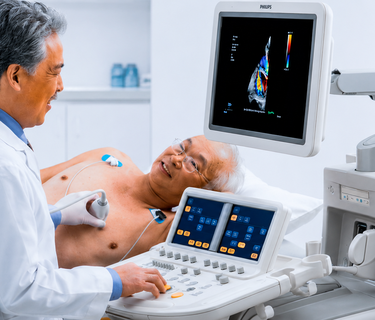
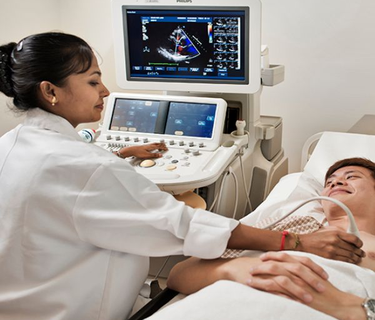
An Echo Cardiogram is generally performed while the patient lies comfortably on an examination table.
A water-based gel is applied to the chest to help transmit ultrasound waves.
The healthcare professional then places a transducer on different areas of the chest to obtain images of the heart from multiple angles.
During the examination, patients may be asked to:
- Change position slightly
- Hold their breath briefly
- Remain still while images are acquired
The images are displayed on a monitor and recorded for evaluation. The examination is typically completed without discomfort and does not require recovery time.
How Should You Prepare for an Echo Cardiogram?
One of the advantages of an Echo Cardiogram is that it generally requires very little preparation. Most patients can continue their normal daily activities before the examination unless their doctor provides specific instructions. Before the test, it may be helpful to:
- Wear comfortable clothing
- Bring previous cardiac reports if available
- Carry ECG reports for comparison if requested
- Inform the healthcare team about current medications
- Bring referral documents if provided by your doctor
For a standard transthoracic echocardiogram, fasting is usually not required unless specifically advised by the healthcare provider. Patients should always follow any preparation instructions provided by their doctor or the diagnostic centre.
Does an Echo Cardiogram Use Radiation?
No.
An Echo Cardiogram does not use ionizing radiation.
Unlike CT scans and X-rays, which use radiation to generate images, an echocardiogram uses high-frequency sound waves.
These sound waves create images of the heart without exposing the patient to radiation.
Because of this, echocardiography is commonly used for:
- Initial cardiac assessment
- Follow-up examinations
- Long-term monitoring of heart conditions
- Evaluation of heart function
The absence of radiation is one reason echocardiography is widely used in cardiology.
Is an Echo Cardiogram Safe?
Yes.
Follow the Instructions for Your Examination
An Echo Cardiogram is generally considered a safe and non-invasive cardiac imaging examination.
The procedure uses ultrasound technology and does not involve radiation exposure.
For most patients, the examination is well tolerated and carries minimal risk
Because the test is non-invasive, it does not require:
- Surgical procedures
- Injections
- Recovery periods
- Sedation in routine cases
Healthcare professionals may recommend echocardiography when it is clinically appropriate and useful for evaluating heart structure and function.
Is an Echo Cardiogram Painful?
No.
A standard Echo Cardiogram is generally painless.
During the examination, a transducer is moved across the chest to obtain images of the heart.
Patients may feel mild pressure from the transducer as images are acquired, but the examination itself is not typically painful.
The gel applied to the skin may feel cool initially, but most patients find the procedure comfortable.
Because no needles or invasive instruments are used, patients are usually able to return to their normal activities immediately after the examination.
Can an Echo Cardiogram Detect Heart Failure?
An Echo Cardiogram is one of the most commonly used tests when evaluating heart function.
The examination can help healthcare professionals assess how effectively the heart pumps blood throughout the body.
Doctors may request an echocardiogram when investigating symptoms such as:
- Shortness of breath
- Fatigue
- Swelling of the legs
- Reduced exercise tolerance
The test can provide information about:
- Heart chamber size
- Heart muscle movement
- Pumping efficiency
- Overall cardiac performance
However, the diagnosis of heart failure depends on multiple factors, including symptoms, physical examination findings and other investigations.
Can an Echo Cardiogram Detect Heart Failure?
An Echo Cardiogram is one of the most commonly used tests when evaluating heart function.
The examination can help healthcare professionals assess how effectively the heart pumps blood throughout the body.
Doctors may request an echocardiogram when investigating symptoms such as:
- Shortness of breath
- Fatigue
- Swelling of the legs
- Reduced exercise tolerance
The test can provide information about:
- Heart chamber size
- Heart muscle movement
- Pumping efficiency
- Overall cardiac performance
However, the diagnosis of heart failure depends on multiple factors, including symptoms, physical examination findings and other investigations.
Can an Echo Cardiogram Detect Heart Valve Problems?
One of the major strengths of echocardiography is its ability to evaluate heart valves.
The heart contains four valves that help regulate blood flow between the chambers of the heart and major blood vessels.
An Echo Cardiogram may help assess:
- Valve structure
- Valve movement
- Valve opening patterns
- Valve closing function
- Blood flow across the valves
Doctors often use echocardiography when evaluating suspected valve disorders or monitoring known valve conditions over time.
The findings help healthcare professionals understand how the valves are functioning within the overall cardiovascular system.
Can an Echo Cardiogram Detect Blocked Arteries?
This is one of the most frequently asked questions by patients.
An Echo Cardiogram does not directly visualize coronary artery blockages.
The examination focuses on:
- Heart chambers
- Heart valves
- Heart muscle movement
- Blood flow patterns
- Overall cardiac function
In some situations, echocardiography may show changes that suggest reduced blood supply to parts of the heart muscle.
However, additional investigations are usually required when doctors need detailed information about coronary arteries.
The most appropriate test depends on the patient's symptoms, risk factors and clinical findings.
Can an Echo Cardiogram Detect Heart Enlargement?
Yes.
An echocardiogram can help evaluate the size of the heart chambers and certain structural features of the heart.
Doctors may recommend an Echo Cardiogram when investigating conditions that could affect heart size or function.
The examination can provide information about:
- Chamber dimensions
- Heart wall thickness
- Structural changes
- Cardiac function
The interpretation of these findings depends on the patient's overall clinical picture and medical history.
How Long Does an Echo Cardiogram Take?
The duration of an Echo Cardiogram depends on the type of examination being performed and the amount of information required.
A standard echocardiogram is typically completed within a relatively short period.
The total appointment time may vary depending on:
- Registration procedures
- Clinical review
- Image acquisition requirements
- Patient-specific factors
Some examinations require additional imaging views, which may extend the duration slightly.
Patients should allow adequate time for the appointment and follow any instructions provided by the diagnostic centre.
Echo Cardiogram vs ECG – What Is the Difference?
Although both tests are commonly used in cardiac assessment, they provide very different information.
An ECG records the electrical activity of the heart.
An Echo Cardiogram produces images of the heart's structure and movement.
| Echo Cardiogram | ECG |
|---|---|
| Creates images of the heart | Records electrical activity |
| Evaluates heart structure | Evaluates heart rhythm |
| Assesses valves and chambers | Assesses electrical conduction |
| Uses ultrasound technology | Uses skin electrodes |
| Provides visual assessment of heart function | Provides electrical assessment of heart activity |
Many patients undergo both examinations because they provide complementary information.
Echo Cardiogram vs Treadmill Test – What Is the Difference?
An Echo Cardiogram and a Treadmill Test are both used in cardiovascular evaluation, but they serve different purposes.
An Echo Cardiogram evaluates heart structure and function at rest using ultrasound imaging.
A Treadmill Test evaluates how the heart responds to physical exertion while monitoring ECG changes during exercise.
| Echo Cardiogram | Treadmill Test |
|---|---|
| Ultrasound-based examination | Exercise-based cardiac assessment |
| Evaluates heart structure | Evaluates response to physical stress |
| Assesses valves and chambers | Assesses exercise-related cardiac changes |
| Performed while resting | Performed during exercise |
The choice of examination depends on the clinical question the doctor is trying to answer.
What Happens After an Echo Cardiogram?
Once the Echo Cardiogram has been completed, the recorded images are reviewed as part of the patient's cardiac assessment.
The findings from the examination are evaluated alongside:
- Medical history
- Present symptoms
- Physical examination findings
- ECG results
- Laboratory investigations
- Previous cardiac imaging studies
An echocardiogram provides detailed information about the structure and function of the heart, but the interpretation of the results should always be performed by qualified healthcare professionals within the context of the patient's overall clinical condition.
Depending on the findings, the doctor may:
- Continue routine monitoring
- Recommend lifestyle modifications
- Request additional investigations
- Adjust ongoing treatment plans
- Refer the patient for further cardiac evaluation
Patients should discuss the results with their treating doctor rather than attempting to interpret cardiac images independently.
Why Choose AVR Scan Centre for an Echo Cardiogram in Thiruporur?
When searching for an Echo Cardiogram in Thiruporur, patients often look for a diagnostic centre that offers accessibility, reliable cardiac imaging services and comprehensive diagnostic support.
AVR Scan Centre provides echocardiography services for patients requiring heart structure and function assessment as advised by their healthcare provider.
Convenient Location in Thiruporur
The centre serves patients from:
- Thiruporur
- Kelambakkam
- Padur
- Navalur
- Siruseri
- Egattur
- Chengalpattu
- Nearby OMR locations
Its location makes it convenient for patients seeking cardiac imaging services close to home.
Cardiac Diagnostic Support
The test provides valuable information about:
- Heart chambers
- Heart valves
- Blood flow
- Cardiac pumping function
- Structural heart assessment
Comprehensive Diagnostic Services
In addition to Echo Cardiogram services, AVR Scan Centre offers a wide range of diagnostic investigations, including:
- MRI Scan 1.5T
- MultiSlice 3D Spiral CT Scan
- Omicron Covid CT Scan
- Ultrasound Scan
- X-Ray
- 3D/4D Obstetric Ultrasound
- Computerized ECG
- Treadmill Test (TMT)
- EEG
- Pulmonary Function Test (PFT)
- Lab Services
- Preventive Master Health Checkup
- Digital Mammogram
- SonoMammography
- OPG
Patient-Focused Care
Patients can contact the centre before visiting to confirm:
- Appointment availability
- Preparation requirements
- Referral requirements
- Additional cardiac investigations requested by their doctor
What Should You Check Before Booking an Echo Cardiogram in Thiruporur?
Before scheduling an Echo Cardiogram, it is helpful to understand why the examination has been recommended and whether any supporting documents are required.
Patients may wish to confirm:
- The purpose of the examination
- Appointment availability
- Referral requirements
- Previous reports that should be brought
- Whether additional cardiac tests have been requested
Bringing previous investigations can be useful for comparison and follow-up assessment.
These may include:
- Previous Echo reports
- ECG reports
- TMT reports
- Cardiology consultation records
- Relevant laboratory results
Providing a complete medical history helps healthcare professionals better understand the patient's condition.
Frequently Asked Questions About Echo Cardiogram in Thiruporur
An Echo Cardiogram is a non-invasive ultrasound examination that creates real-time images of the heart to evaluate its structure and function.
AVR Scan Centre provides Echo Cardiogram services for patients seeking cardiac imaging and heart function assessment in Thiruporur and nearby OMR areas.
No. An Echo Cardiogram uses ultrasound waves and does not expose patients to ionizing radiation.
No. The examination is generally painless and non-invasive. Most patients experience only mild pressure from the ultrasound transducer during image acquisition.
The duration varies depending on the examination requirements, but most standard echocardiograms are completed within a relatively short period.
Yes. Echocardiography is commonly used to assess the structure and function of heart valves and evaluate blood flow across them.
TAn Echo Cardiogram can provide important information about the heart's pumping function and may contribute to the evaluation of heart failure.
An ECG records the electrical activity of the heart, while an Echo Cardiogram creates images of the heart's structure and movement using ultrasound.
Most standard echocardiograms do not require fasting unless specific instructions are provided by the healthcare provider.
An Echo Cardiogram does not directly visualize coronary artery blockages, although it may show changes that suggest reduced heart function. Additional investigations may be required when coronary artery disease is suspected.
Get Your Echo Cardiogram in Thiruporur at AVR Scan Centre
An Echo Cardiogram is one of the most important non-invasive cardiac imaging examinations used to evaluate heart structure, heart valves, blood flow and overall cardiac function.
Whether your doctor has recommended an echocardiogram because of symptoms such as shortness of breath, chest discomfort, heart murmurs, swelling of the legs or as part of ongoing cardiac monitoring, understanding the purpose of the examination can help you feel more informed and prepared.
At AVR Scan Centre, patients can access Echo Cardiogram services in Thiruporur for comprehensive heart function assessment and cardiac imaging support.
Patients from Thiruporur, Kelambakkam, Padur, Navalur, Siruseri, Egattur, Chengalpattu and nearby OMR locations can conveniently access echocardiography services.
Before your visit, contact the centre to confirm:
- Appointment availability
- Echo test requirements
- Referral requirements
- Additional cardiac investigations
- Service availability
AVR Scan Centre – Thiruporur
Ground Floor, No. 27, West Mada Street, Thiruporur, Tamil Nadu – 603110.
Contact AVR Scan Centre to enquire about the Echo Cardiogram examination recommended by your doctor and confirm appointment availability.
