

Omicron Covid CT Scan in Thiruporur
HRCT Chest Assessment at AVR Scan Centre
Respiratory illnesses can affect people differently. While some individuals recover with mild symptoms, others may experience persistent breathing difficulties, prolonged cough, reduced oxygen levels, or ongoing chest discomfort that requires further medical evaluation.
When doctors need a detailed view of the lungs, they may recommend an Omicron Covid CT Scan, commonly performed as a High-Resolution CT (HRCT) Chest Scan. This advanced imaging examination produces detailed images of the lungs and chest structures, helping healthcare professionals evaluate lung involvement, monitor respiratory conditions, and assess recovery when clinically necessary.
Unlike routine chest imaging, HRCT technology is specifically designed to provide highly detailed views of lung tissue. This allows doctors to evaluate subtle abnormalities that may not be visible on standard imaging studies.
At AVR Scan Centre, Thiruporur, HRCT Chest imaging is available for patients who require detailed lung assessment based on their doctor's recommendation. Patients from Thiruporur, Kelambakkam, Padur, Navalur, Siruseri, Chengalpattu, and nearby OMR locations can access advanced diagnostic imaging services conveniently.
It is important to understand that not every patient with respiratory symptoms requires a CT scan. The decision to perform HRCT imaging should always be based on clinical evaluation and medical necessity.
What Is an Omicron Covid CT Scan?
An Omicron Covid CT Scan is a specialized HRCT Chest examination used to evaluate the lungs when respiratory symptoms require further investigation.
HRCT stands for High-Resolution Computed Tomography , a diagnostic imaging technique that creates highly detailed cross-sectional images of lung structures.
Doctors may recommend HRCT Chest imaging when they need additional information regarding:
- Lung health
- Respiratory symptoms
- Suspected lung involvement
- Persistent breathing difficulties
- Post-infection lung assessmen
- Ongoing chest-related concerns
The examination provides detailed visualization of lung tissue, airways, and surrounding chest structures, helping doctors better understand what may be contributing to a patient's symptoms.
While HRCT can provide valuable information about lung health, it should not be considered a replacement for laboratory testing or clinical evaluation. Imaging findings are only one part of the overall assessment process.
Omicron Covid CT Scan in Thiruporur – When Might a Doctor Recommend It?
Many patients assume that every respiratory illness requires a CT scan, but that is not the case.
In reality, most people with mild symptoms recover without needing advanced imaging. However, there are situations where doctors may recommend HRCT Chest imaging to obtain a more detailed understanding of lung health.
A doctor may consider an Omicron Covid CT Scan when a patient experiences:
- Persistent cough
- Ongoing shortness of breath
- Reduced oxygen saturation
- Worsening respiratory symptoms
- Unexplained chest discomfort
- Delayed recovery from respiratory illness
- Persistent symptoms following Covid infection
The purpose of the examination is not simply to identify infection but to evaluate how the lungs are functioning and whether any visible abnormalities require further medical attention.
The decision to perform an HRCT scan should always be individualized and based on professional medical judgment.
What Is HRCT Chest and How Is It Different from a Regular CT Scan?
Many patients hear the term "HRCT Chest" and wonder how it differs from a standard CT examination.
Although both use computed tomography technology, HRCT is specifically optimized to evaluate lung tissue with exceptional detail.
A routine CT scan may be used to evaluate a broad range of medical conditions involving the brain, abdomen, bones, blood vessels, and internal organs. HRCT, on the other hand, focuses specifically on lung anatomy and respiratory structures.
The enhanced detail provided by HRCT allows doctors to assess:
- Lung tissue patterns
- Airways
- Small structural changes
- Pulmonary abnormalities
- Interstitial lung conditions
Because respiratory illnesses can affect the lungs in complex ways, HRCT is often preferred when doctors require a more detailed assessment of lung health.
How Does Covid Affect the Lungs?
The respiratory system plays a vital role in delivering oxygen throughout the body.
When respiratory infections affect the lungs, inflammation can develop within the delicate air sacs responsible for oxygen exchange. This may interfere with normal lung function and contribute to breathing difficulties.
Patients may experience symptoms such as:
- Breathlessness
- Persistent cough
- Fatigue
- Reduced exercise tolerance
- Chest tightness
- Low oxygen levels
The degree of lung involvement varies significantly from one individual to another.
Some patients experience only mild symptoms, while others may develop more noticeable respiratory changes that require monitoring and medical evaluation.
Because symptoms alone do not always reflect the condition of the lungs, doctors may occasionally recommend HRCT Chest imaging when additional information is needed.
The scan provides detailed images that help healthcare professionals assess lung structures and understand how respiratory illness may be affecting lung tissue.
What Can an HRCT Chest Scan Show?
One of the primary advantages of HRCT imaging is its ability to provide detailed visualization of lung structures.
Depending on the clinical situation, the examination may help doctors evaluate:
Lung Tissue Changes
HRCT imaging can reveal changes affecting lung tissue that may not be visible on standard imaging studies.
Inflammatory Patterns
Certain respiratory conditions may produce inflammatory changes within the lungs that can be evaluated through high-resolution imaging.
Distribution of Lung Findings
The scan helps doctors determine whether abnormalities are localized or distributed across different lung regions.
Airway Assessment
HRCT can provide detailed views of the airways and surrounding structures.
Recovery Monitoring
For selected patients, HRCT may help doctors evaluate how the lungs are recovering following respiratory illness.
The findings observed on the scan are interpreted alongside symptoms, examination findings, laboratory investigations, and medical history.
What Are Ground-Glass Opacities in Covid CT Scans?
Many patients become concerned when they read the term Ground-Glass Opacity (GGO) in a radiology report.
Despite its unusual name, the term does not refer to actual glass within the lungs. Instead, it is a descriptive radiology phrase used to characterize a particular appearance seen on CT images.
Ground-glass opacities appear as hazy areas within the lungs that do not completely obscure underlying lung structures.
These findings may occur in a variety of lung conditions, including:
- Respiratory infections
- Inflammatory lung diseases
- Pulmonary disorders
- Certain healing or recovery processes
The presence of ground-glass opacities alone does not establish a diagnosis.
Radiologists evaluate multiple factors when interpreting these findings, including:
- Location
- Distribution
- Extent
- Associated abnormalities
- Clinical history
Because many different conditions can produce similar appearances, imaging findings should always be interpreted by qualified healthcare professionals.
Can an HRCT Chest Scan Detect Covid Pneumonia?
HRCT Chest imaging may help doctors evaluate lung changes that can occur in patients with respiratory infections, including pneumonia-related abnormalities.
The examination provides detailed images that allow healthcare professionals to assess:
- Lung involvement
- Distribution of abnormalities
- Areas of inflammation
- Extent of visible changes
However, it is important to understand that imaging findings alone cannot determine the exact cause of pneumonia.
Doctors combine CT findings with:
- Symptoms
- Laboratory results
- Clinical examination
- Medical history
to establish an accurate diagnosis and determine the most appropriate course of care.
What Is a CT Severity Score?
One of the most frequently discussed terms in Covid-related imaging is the CT Severity Score. Patients often see this mentioned in their reports and wonder what it means for their health.
A CT Severity Score is a structured method used by radiologists to describe the extent of visible lung involvement on an HRCT Chest Scan. It provides doctors with a standardized way of documenting imaging findings and communicating the overall appearance of the lungs.
It is important to understand that the severity score is not a diagnosis, nor does it independently determine treatment decisions.
When assessing a patient, doctors consider multiple factors, including:
- YSymptoms
- Oxygen saturation levels
- Physical examination findings
- Medical history
- Laboratory test results
- Existing medical conditions
- Imaging findings
The CT Severity Score should always be interpreted as part of the broader clinical picture rather than as a standalone indicator of disease severity.
Patients should avoid comparing scores with others or attempting to interpret the findings without professional medical guidance.
Can an HRCT Chest Scan Help Evaluate Long Covid Symptoms?While many people recover completely after Covid infection, some individuals continue to experience symptoms for weeks or months after recovery. These ongoing symptoms are often referred to as Long Covid or Post-Covid Syndrome.
Patients may experience:
- Persistent fatigue
- Breathlessness
- Reduced exercise tolerance
- Ongoing cough
- Chest discomfort
- Difficulty performing routine activities
When respiratory symptoms persist, doctors may recommend HRCT Chest imaging to better understand whether any visible lung abnormalities could be contributing to the patient's condition.
The scan can help evaluate lung structures and provide additional information about respiratory health. However, not all Long Covid symptoms are associated with visible imaging findings.
For this reason, HRCT imaging is usually considered alongside other clinical assessments, pulmonary function tests, and medical evaluations.
What Symptoms May Lead to a Covid CT Scan Recommendation?
Every patient's experience with respiratory illness is different. Some individuals recover quickly, while others may develop symptoms that require closer medical evaluation.
A doctor may consider HRCT Chest imaging when symptoms such as the following are present:
Persistent Breathlessness
Difficulty breathing that continues despite recovery may require further assessment of lung health.
Ongoing Cough
A cough that does not improve over time may prompt doctors to investigate underlying respiratory causes.
Reduced Oxygen Levels
Patients experiencing lower oxygen saturation may require additional evaluation to determine whether lung abnormalities are present.
Chest Tightness
Persistent chest discomfort or tightness may sometimes lead to imaging assessment, depending on the clinical situation.
Exercise Intolerance
Some patients notice difficulty performing activities that were previously easy. HRCT imaging may occasionally be used to investigate whether lung changes are contributing to these symptoms.
The decision to perform imaging is always individualized and based on the patient's overall clinical condition.
When Is the Best Time to Have a Covid CT Scan?
Many patients wonder whether a CT scan should be performed immediately after symptoms begin.
The answer depends on several factors, including:
- Symptom severity
- Clinical findings
- Oxygen levels
- Doctor's assessment
- Medical history
There is no single timeline that applies to every patient.
Because imaging findings can evolve during the course of illness, doctors determine the most appropriate timing based on individual circumstances.
Patients should avoid self-prescribing imaging studies and should seek medical advice regarding whether a CT scan is appropriate and when it should be performed.
What Is the Difference Between HRCT and Chest X-Ray?
Both HRCT Chest and Chest X-Ray are commonly used to evaluate respiratory conditions, but they provide different levels of detail.
A Chest X-Ray is often used as an initial imaging examination because it is quick, widely available, and effective for assessing many chest conditions.
HRCT Chest imaging provides a significantly more detailed view of lung structures and can reveal abnormalities that may not be clearly visible on a standard X-ray.
Chest X-Ray
A Chest X-Ray provides a general overview of:
- Lungs
- Heart
- Chest cavity
- Major structures within the chest
HRCT Chest
HRCT provides detailed assessment of:
- Lung tissue
- Airways
- Fine lung structures
- Distribution of lung abnormalities
- Pulmonary changes
The choice between HRCT and Chest X-Ray depends on the clinical question being investigated and the information required by the doctor.
Can an HRCT Chest Scan Detect Lung Fibrosis After Covid?
Some patients are concerned about whether respiratory illness can leave lasting effects on the lungs.
One condition that may be discussed during recovery is lung fibrosis, a term used to describe scarring within lung tissue.
In selected situations, doctors may recommend HRCT Chest imaging when evaluating persistent respiratory symptoms following recovery.
HRCT provides detailed visualization of lung tissue and can assist healthcare professionals in assessing whether structural changes are present.
However, not every patient with persistent symptoms develops fibrosis, and not every imaging abnormality represents permanent lung damage.
Because lung healing can continue over time, doctors evaluate imaging findings carefully and interpret them alongside symptoms and pulmonary function assessments.
Patients should always discuss scan findings with their healthcare provider rather than drawing conclusions from imaging reports alone.
What Are the Limitations of a Covid CT Scan?
Although HRCT Chest imaging is a valuable diagnostic tool, it is important to understand that no imaging examination can answer every medical question.
A Covid CT Scan has several limitations.
It Cannot Confirm Infection
A CT scan cannot independently diagnose Covid infection. Laboratory testing remains the primary diagnostic method.
It Cannot Predict Recovery
Imaging findings alone cannot determine how quickly a patient will recover or predict future health outcomes.
Symptoms May Not Match Imaging Findings
Some patients experience significant symptoms despite relatively limited imaging abnormalities, while others may have visible findings with fewer symptoms.
Additional Tests May Still Be Required
Doctors may recommend other investigations such as:
- Blood tests
- Pulmonary function tests
- Oxygen assessment
- Clinical evaluation
- Additional imaging
The CT scan should therefore be viewed as one component of a comprehensive medical assessment.

How Should You Prepare for an Omicron Covid CT Scan?
One of the advantages of HRCT Chest imaging is that preparation is usually straightforward.
Most patients can continue their normal daily activities before the examination unless specific instructions are provided.
Before attending your appointment:
Wear Comfortable Clothing
Comfortable clothing helps make the examination process easier.
Bring Medical Documents
If available, carry:
- TDoctor's referral
- Previous CT scans
- Previous chest imaging
- Relevant medical records
Inform the Imaging Team About Medical Conditions
Patients should mention any significant medical conditions that may be relevant to the examination.
Arrive on Time
Arriving slightly before the scheduled appointment allows sufficient time for registration and preparation.
The imaging team will provide any additional instructions if necessary.
What Happens During an Omicron Covid CT Scan?
Many patients feel more comfortable when they know exactly what to expect before arriving for the scan.
The examination is typically quick and straightforward.
After registration, patients are guided to the CT imaging area. The radiology team explains the procedure and answers any questions before the scan begins.
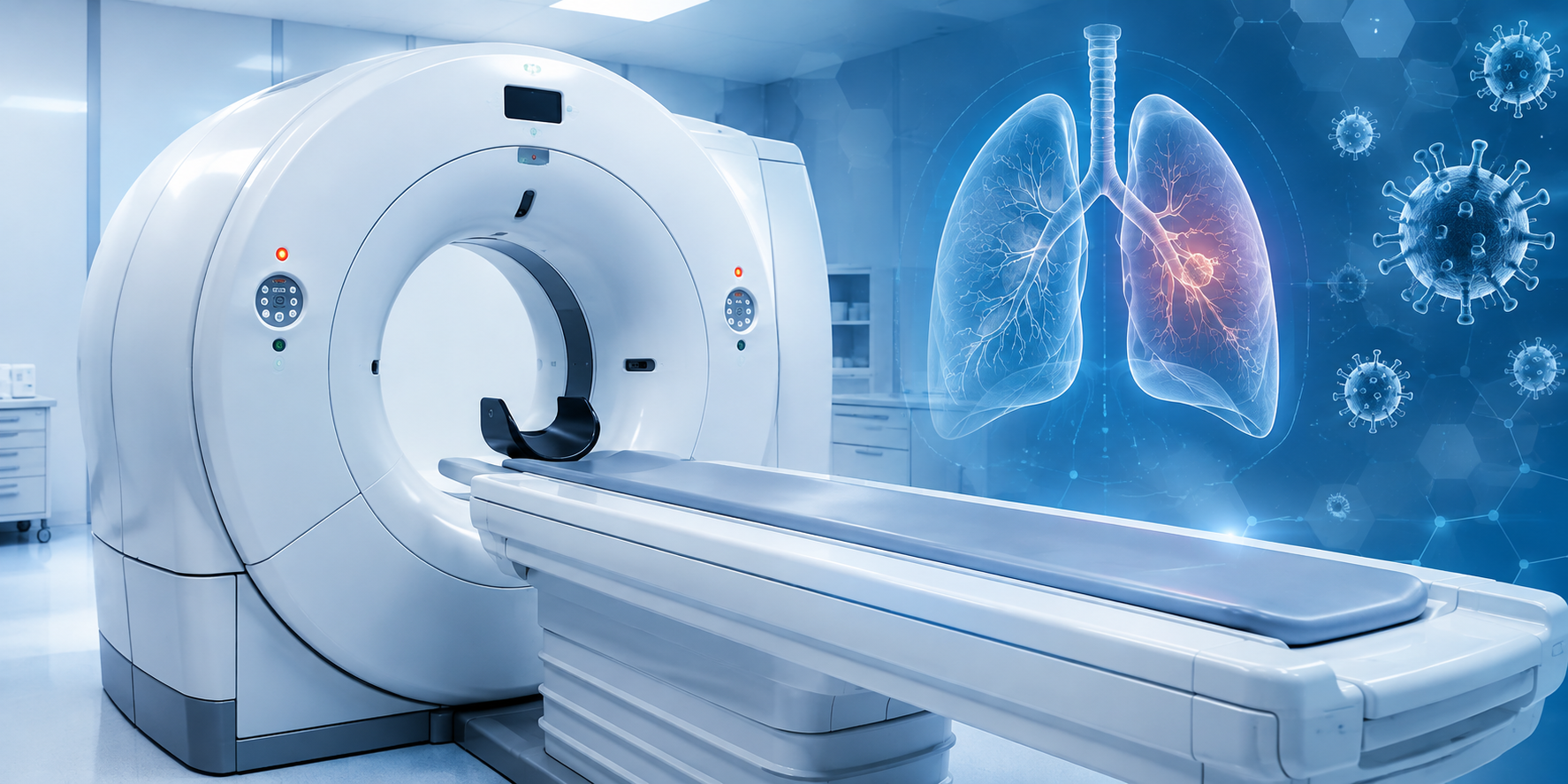
During the examination, you will lie comfortably on the CT scanning table. The table moves through the scanner opening while images are acquired.
You may be asked to hold your breath briefly at specific moments to help improve image quality.
The scanner does not touch the body, and the procedure is generally painless.
Most HRCT Chest examinations are completed within a few minutes, making it one of the faster advanced imaging procedures available.
Does Every Covid CT Scan Require Contrast?
No.
Most HRCT Chest examinations performed for Covid-related lung assessment are conducted without contrast material.
Non-contrast HRCT imaging is often sufficient for evaluating lung tissue and respiratory abnormalities.
However, there may be specific clinical situations where a doctor recommends contrast-enhanced imaging to evaluate additional structures within the chest.
The decision depends on:
- Clinical symptoms
- Medical history
- Diagnostic requirements
- Doctor's recommendation
Patients should follow the instructions provided for their specific examination.
Does Every Covid CT Scan Require Contrast?
HRCT Chest imaging is widely used throughout modern healthcare when clinically appropriate.
The examination uses X-ray technology to produce detailed images of the lungs and chest structures.
Doctors recommend HRCT imaging only when the expected diagnostic benefit justifies performing the examination.
Before the scan, patients should inform the healthcare team about:
- Pregnancy
- Availability
- Existing medical conditions
- Previous imaging history
- Any concerns regarding the examination
Patient safety remains an important part of the imaging process, and healthcare professionals carefully consider whether the examination is appropriate for each individual.
Does an HRCT Chest Scan Use Radiation?
One of the most common questions patients ask before undergoing a Covid CT Scan is whether the examination involves radiation.
The answer is yes. An HRCT Chest Scan uses X-ray technology to create detailed cross-sectional images of the lungs and chest structures. Like other CT examinations, the scan involves exposure to ionizing radiation.
However, modern CT systems are designed to obtain high-quality diagnostic images using optimized imaging protocols appropriate for the clinical examination being performed.
The amount of radiation exposure can vary depending on factors such as:
- The type of CT examination
- Imaging protocol used
- Patient size and body structure
- Clinical requirements
Healthcare professionals recommend CT imaging only when the expected diagnostic benefit outweighs potential risks.
For patients experiencing significant respiratory symptoms, the information obtained from an HRCT Chest Scan may provide valuable insights that help guide medical evaluation and treatment decisions.
If you have concerns regarding radiation exposure, discuss them with your doctor or the radiology team before your examination.
How Do Radiologists Interpret an HRCT Chest Report?
After the scan is completed, the images are reviewed by a radiologist who examines the lungs and surrounding chest structures in detail.
Radiologists assess multiple aspects of the scan, including:
Lung Appearance
The overall appearance of lung tissue is evaluated for any visible abnormalities.
Distribution of Findings
The location and pattern of any findings are carefully assessed.
Extent of Lung Involvement
The radiologist evaluates how much of the lung appears affected.
Associated Chest Findings
Other chest structures visible on the scan may also be reviewed when relevant.
The final report is prepared and sent to the referring doctor, who combines the imaging findings with clinical information to determine the next steps.
Patients should avoid attempting to interpret CT images independently, as imaging findings require professional medical assessment.
Can an HRCT Chest Scan Help Evaluate Recovery After Covid?
Recovery experiences vary widely among patients.
While many individuals recover completely within a relatively short period, others may continue to experience symptoms even after the infection has resolved.
In selected situations, doctors may recommend HRCT imaging during recovery to assess lung health and evaluate persistent respiratory symptoms.
The scan may provide additional information regarding:
- Ongoing breathlessness
- Persistent cough
- Reduced exercise tolerance
- Chest discomfort
- Lung recovery progress
It is important to understand that recovery assessment is based on more than imaging alone.
Doctors also consider:
- Symptoms
- Physical examination findings
- Oxygen levels
- Medical history
- Pulmonary function testing
- Overall clinical progress
HRCT imaging therefore serves as one component of a broader recovery evaluation process.
Covid CT Scan for Elderly Patients
Older adults often have unique healthcare considerations when experiencing respiratory illness.
Age-related changes, chronic medical conditions, and reduced physiological reserve can sometimes make respiratory symptoms more challenging to evaluate.
When clinically appropriate, doctors may recommend HRCT Chest imaging for elderly patients who require detailed assessment of lung structures.
The examination can help healthcare professionals better understand respiratory findings and support clinical decision-making.
Because every patient's situation is different, imaging recommendations are based on individual medical needs rather than age alone.
Family members should always consult the treating physician regarding the most appropriate investigations and treatment plans.
Covid CT Scan for Patients with Asthma, COPD and Other Lung Conditions
Patients with existing respiratory conditions often have questions about how respiratory infections may affect their lungs.
Individuals with conditions such as:
- Asthma
- Chronic Obstructive Pulmonary Disease (COPD)
- Bronchiectasis
- Interstitial Lung Disease
- Chronic respiratory disorders
may already have underlying lung abnormalities before developing a respiratory infection.
When symptoms worsen or additional evaluation is required, doctors may recommend HRCT Chest imaging to assess current lung status and better understand the cause of symptoms.
The scan can provide valuable information regarding lung structure, but interpretation must always take into account the patient's underlying respiratory condition.
For this reason, clinical history remains an essential part of the assessment process.
Why Early Lung Assessment Can Be Important
Respiratory symptoms should never be ignored, especially when they are persistent, worsening, or affecting daily activities.
When clinically indicated, early diagnostic evaluation may help doctors:
- Understand the cause of symptoms
- Assess lung involvement
- Identify potential complications
- Guide further investigations
- Support treatment planning
It is important to note that not every patient requires advanced imaging.
However, when symptoms suggest that additional information is needed, timely evaluation can help ensure appropriate medical management.
Patients experiencing concerning respiratory symptoms should seek medical advice rather than relying solely on self-assessment.
What Happens After an Omicron Covid CT Scan?
Once the examination has been completed, the images enter the reporting process.
A radiologist carefully reviews the scan and prepares a detailed report describing the findings.
The referring doctor then evaluates the report alongside:
- Symptoms
- Oxygen saturation levels
- Physical examination findings
- Laboratory investigations
- Medical history
The CT scan findings help contribute to the overall understanding of the patient's respiratory health.
Depending on the clinical situation, the doctor may:
- Continue observation
- Recommend additional tests
- Suggest follow-up imaging
- Adjust treatment plans
- Refer the patient for specialist evaluation
The most appropriate next step depends on the individual's medical condition and clinical assessment.
Why Choose AVR Scan Centre for Omicron Covid CT Scan in Thiruporur?
When selecting a diagnostic imaging centre, patients often look for accessibility, advanced imaging technology, and comprehensive healthcare support.
AVR Scan Centre provides HRCT Chest imaging services for patients requiring detailed lung assessment in and around Thiruporur.
Convenient Location for OMR Residents
Patients from the following areas can easily access the centre:
- Thiruporur
- Kelambakkam
- Padur
- Navalur
- Siruseri
- Egattur
- Sholinganallur
- Chengalpattu
- Navalur
- OMR Corridor
Advanced Diagnostic Imaging Services
AVR Scan Centre offers a range of diagnostic services under one roof, helping patients access multiple healthcare investigations conveniently.
Services include:
- MRI Scan 1.5T
- Multi-Slice 3D CT Scan
- Omicron Covid CT Scan
- Ultrasound
- X-Ray
- 3D/4D Obstetrics
- Computerized ECG
- Echo Cardiogram
- SonoMammography
- Treadmill Test
- EEG
- PET
- Lab Services
- Preventive Master Health Checkup
- Digital Mammogram
- OPG
Patient-Focused Care
Patients can contact the centre before their appointment to understand:
- Preparation requirements
- Appointment availability
- Examination procedures
- Referral requirements
- General guidance before visiting
What Should You Check Before Booking an Omicron Covid CT Scan in Thiruporur?
Before scheduling your HRCT Chest examination, consider the following:
Understand Why the Scan Has Been Recommended
Knowing the clinical purpose of the examination can help you understand what information your doctor is seeking.
Bring Relevant Medical Records
Previous investigations may assist with comparison and clinical assessment.
These may include:
- Previous CT scans
- Chest X-rays
- Blood test reports
- Medical records
- Doctor referrals
Inform the Imaging Team About Existing Conditions
Patients should disclose any significant medical history relevant to the examination.
Confirm Appointment Requirements
Before visiting, contact the centre to confirm appointment availability and any instructions specific to your examination.
Frequently Asked Questions About Omicron Covid CT Scan in Thiruporur
An Omicron Covid CT Scan is an HRCT Chest examination used to evaluate lung structures when respiratory symptoms require further medical assessment.
HRCT stands for High-Resolution Computed Tomography. It provides highly detailed images of lung tissue and respiratory structures.
No. Many patients recover without requiring imaging. CT scans are generally recommended only when clinically indicated.
No. Laboratory testing remains the primary method used to diagnose active Covid infection.
A CT Severity Score is a structured method used by radiologists to describe the extent of lung findings visible on HRCT imaging.
No. The examination is non-invasive and generally painless.
Most HRCT Chest examinations are completed within a few minutes, although total appointment time may vary.
Doctors may recommend HRCT imaging when assessing persistent respiratory symptoms following recovery.
Yes. HRCT imaging uses X-ray technology to produce detailed images of the lungs.
AVR Scan Centre provides HRCT Chest imaging services for patients in Thiruporur and nearby OMR locations.
Get Your Omicron Covid CT Scan in Thiruporur at AVR Scan Centre?
Understanding your lung health can be an important part of evaluating respiratory symptoms and supporting medical decision-making.
If your doctor has recommended an HRCT Chest examination, choosing a diagnostic centre that offers convenient access and comprehensive imaging services can help make the process smoother.
AVR Scan Centre provides Omicron Covid CT Scan and HRCT Chest imaging services in Thiruporur for patients requiring detailed lung assessment.
Before your visit, it is advisable to confirm:
- Appointment availability
- Preparation instructions
- Referral requirements
- Examination details
- Any doctor-specific recommendations
Need an Omicron Covid CT Scan in Thiruporur?
Before your visit, it is advisable to confirm:
Contact AVR Scan Centre to enquire about the HRCT Chest examination recommended by your doctor and confirm appointment availability.
AVR Scan Centre – Thiruporur
Ground Floor, No. 27, West Mada Street, Thiruporur, Tamil Nadu – 603110
